

Unlocking the Cloud's Defenses: A Comprehensive Guide to Cloud Security
Mastering Data Protection, Compliance, and Risk Management in the Digital Frontier
As businesses increasingly move their critical operations and sensitive data to the cloud, many find themselves questioning the true safety of their digital assets in this vast, shared environment. The promise of agility, while attractive, often introduces new layers of security complexities that demand careful attention.
A thorough understanding of cloud security, from its fundamental definitions to the latest tools and strategic implementations, is no longer merely an option. It has become a foundational requirement for any organization aiming for resilience and compliance in today's digital landscape.
This guide will clarify the essential components needed to protect your data in the cloud. It offers a clear roadmap for building a robust defense, navigating the security features of major providers like AWS and Google Cloud, and ultimately ensuring your digital operations remain secure.
The shift to the cloud has become an essential step for modern enterprises, promising impressive scalability, flexibility, and cost efficiency. However, alongside these advantages comes the complex challenge of ensuring robust cloud security. This isn't merely about applying traditional IT security measures to a new environment; it demands a fundamental shift in understanding how data is stored, accessed, and managed within a shared, distributed infrastructure. For many, the concept of cloud data security still brings to mind vague, unmanageable risks.
This comprehensive guide aims to clarify this complex area, offering a deep, educational understanding of cloud security, its core definitions, and its indispensable role in protecting sensitive information. We will examine the foundational principles, introduce the essential architectural pillars, and explore the advanced tools and strategic roadmaps necessary for effective implementation. By reviewing how these concepts apply to leading cloud providers like AWS and Google Cloud, we will provide you with the strategic insights needed to secure your cloud deployments, ensure compliance, and confidently manage the complexities of the digital landscape. Our goal is to empower you to transform cloud security from a potential vulnerability into a powerful enabler of your business’s innovation and resilience.
Quick navigation
- The Shared Frontier: Demystifying Cloud Security Fundamentals
- The Five Pillars of Protection: Core Components of a Resilient Cloud Security Strategy
- The Toolkit of Tomorrow: Essential Cloud Security Technologies and Practices
- Navigating the Hyperscalers: Cloud Security in AWS and Google Cloud Environments
- What this means for you
- Risks, trade-offs, and blind spots
- Main points
The Shared Frontier: Demystifying Cloud Security Fundamentals
To truly understand the intricacies of cloud security, we must first establish a foundational understanding of what it entails and how it differs from traditional on-premise security. Fundamentally, cloud security refers to the set of policies, technologies, applications, and controls used to protect virtualized intellectual property, data, applications, and the underlying infrastructure of cloud computing. It's specifically about securing data and applications hosted on cloud platforms, rather than on local servers. This essential shift introduces both unique challenges and new opportunities for defense.

The cornerstone concept in cloud security is the Shared Responsibility Model. This model states that while the cloud provider (such as AWS, Google Cloud, or Azure) is responsible for the security of the cloud – encompassing the underlying infrastructure, hardware, software, networking, and physical facilities – the customer retains responsibility for the security in the cloud. This includes their data, applications, operating systems, network configuration, and access controls. A common misunderstanding of this division of labor is a frequent cause of security breaches. For instance, a cloud provider ensures their physical servers are secure and regularly patched, but it remains your duty to configure your virtual machines securely and protect the data stored within them. It's important to ask: does simply migrating to the cloud automatically relieve you of your critical security obligations?
Unique challenges of cloud environments include the reduced direct control over the underlying infrastructure, the dynamic and elastic nature of cloud resources, and the requirement for new skill sets to manage cloud-native security tools effectively. However, the cloud also provides significant security benefits, such as inherent resilience, advanced security services offered by the cloud vendors themselves, and the capacity to automate security processes at scale. This often allows for a more proactive and adaptive security posture than is typically achievable in traditional data centers. Therefore, understanding this shared responsibility model and the inherent characteristics of cloud computing represents the crucial first step toward building an effective and resilient cloud data security strategy.
As organizations continue their rapid adoption of cloud services, a clear comprehension of these fundamental concepts is no longer optional; it is an absolute necessity for effectively protecting digital assets in this constantly evolving landscape.
The Five Pillars of Protection: Core Components of a Resilient Cloud Security Strategy
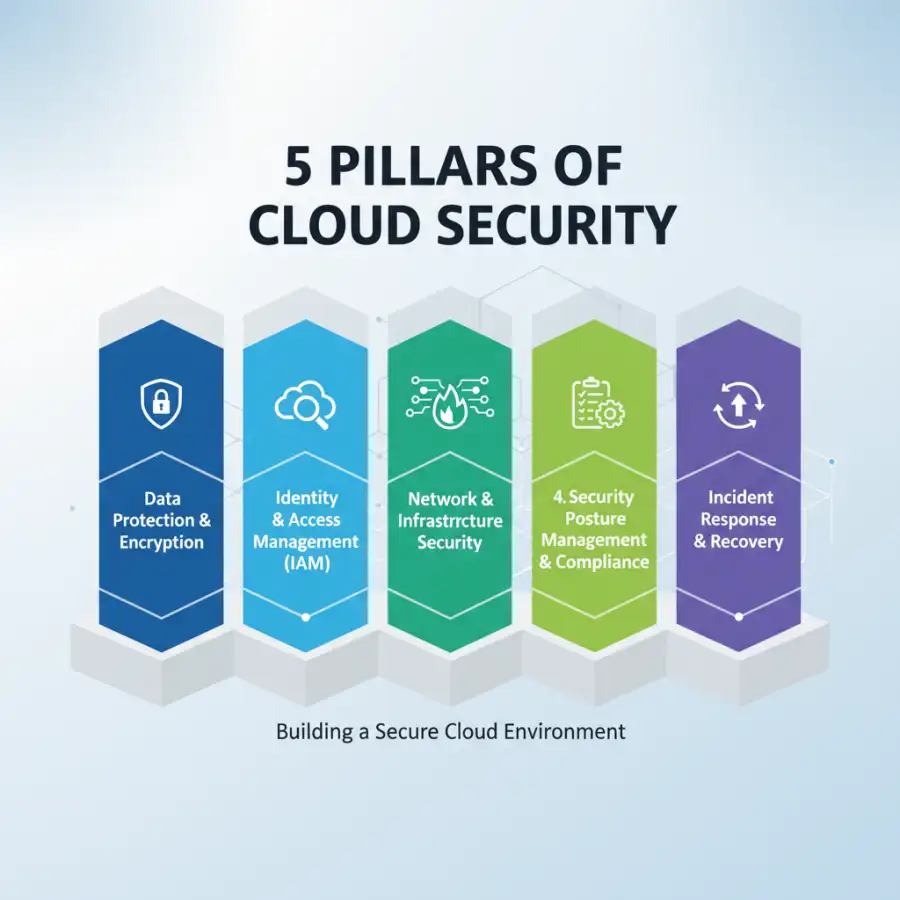
Building an effective cloud security posture requires a multi-faceted approach, typically structured around five core pillars. These pillars represent the critical areas that demand attention for the comprehensive protection of cloud data security. Overlooking or neglecting any one of them can create a significant vulnerability, potentially undermining the entire security framework.
1. Identity and Access Management (IAM): This is arguably the most critical pillar of cloud security. IAM ensures that only authorized users and services can access cloud resources, and only to the extent absolutely necessary. It involves managing digital identities, securely authenticating users, and defining granular permissions based on the principle of least privilege. Strong IAM controls are vital for preventing unauthorized access, which is a leading cause of data breaches. Consider IAM as the digital bouncer for your cloud environment, meticulously checking every credential and ensuring only approved entities gain entry.
2. Data Protection: Protecting data at rest (stored), in transit (moving), and in use (being processed) is fundamental to any cloud security strategy. This pillar focuses on implementing strong encryption for both data storage and transmission, employing data loss prevention (DLP) strategies, utilizing data masking techniques, and establishing robust backup and recovery plans. Ultimately, this ensures the confidentiality, integrity, and availability of your information, regardless of its location within the cloud.
3. Network Security: Just like traditional on-premise networks, cloud networks demand robust protection. This involves implementing virtual private clouds (VPCs), configuring security groups and network access control lists (ACLs), deploying various types of firewalls (including traditional network firewalls and web application firewalls - WAFs), and utilizing intrusion detection/prevention systems (IDS/IPS). These collective controls are essential for isolating resources, filtering malicious traffic, and preventing unauthorized network access. It prompts a critical question: is merely having a network in the cloud sufficient, or is it imperative to actively segment and defend every virtual ingress and egress point?
4. Logging and Monitoring: As the saying goes, "You can't secure what you can't see." This pillar emphasizes the continuous collection, thorough analysis, and timely alerting on all security-related logs and events generated across your entire cloud environment. Tools such as security information and event management (SIEM) systems, cloud security posture management (CSPM) solutions, and cloud workload protection platforms (CWPP) are absolutely crucial in this domain. Proactive monitoring of these logs enables the rapid detection of anomalies and potential threats, often allowing for intervention before they can escalate into full-blown security breaches.
5. Incident Response and Resilience: Despite the most diligent efforts, security incidents can still occur. This pillar focuses on establishing a well-defined incident response plan, which includes clear procedures for detection, containment, eradication, recovery, and thorough post-incident analysis. It also covers broader resilience strategies such as disaster recovery, business continuity planning, and fault tolerance, all designed to ensure minimal disruption and rapid recovery from any significant security event. These five pillars, when robustly implemented and continuously managed, collectively form a comprehensive and adaptive defense strategy for any cloud deployment.
The Toolkit of Tomorrow: Essential Cloud Security Technologies and Practices
Implementing a strong cloud security strategy requires utilizing a specialized toolkit designed to address the unique challenges of cloud environments. These technologies, combined with sound practices, form the operational backbone for effective cloud data security. Understanding and effectively utilizing these tools is crucial for any organization operating in the cloud.
One of the foundational best practices for cloud data security is encryption. All sensitive data, whether at rest (stored on disks or in databases) or in transit (moving across networks between services or to users), should be encrypted. While cloud providers offer native encryption services, many organizations choose to implement additional layers of encryption for their most critical data. This ensures that even if data is accessed by unauthorized parties, it remains unreadable and protected. Another non-negotiable practice is Multi-Factor Authentication (MFA). Requiring more than one form of verification (e.g., a password plus a code from a mobile app) significantly reduces the risk of credential compromise, which is a frequent vector for cloud breaches.
In terms of dedicated security tools, Cloud Access Security Brokers (CASBs) serve as gatekeepers positioned between cloud users and cloud applications. They are designed to enforce security policies, provide deep visibility into cloud usage, prevent data leakage, and help ensure regulatory compliance. Cloud Security Posture Management (CSPM) tools continuously monitor cloud configurations against established security benchmarks and compliance frameworks. They are instrumental in alerting organizations to misconfigurations that could inadvertently lead to vulnerabilities. Given that misconfigurations consistently rank as a leading cause of cloud breaches, CSPM solutions are indispensable for maintaining a secure cloud environment.
Cloud Workload Protection Platforms (CWPP) are specifically designed to protect diverse workloads—including virtual machines, containers, and serverless functions—wherever they execute across the cloud. These platforms offer crucial capabilities such as vulnerability management, anti-malware protection, host intrusion detection, and application control. For centralized log analysis and proactive threat detection, Security Information and Event Management (SIEM) systems ingest security logs from various cloud services and applications. They then use advanced analytics and artificial intelligence to identify potential threats and generate timely alerts. It's vital to consider: do you truly have comprehensive visibility into every corner of your cloud infrastructure, or are you operating with potential blind spots that sophisticated threats could easily exploit?
Web Application Firewalls (WAFs) provide essential protection for web applications hosted in the cloud, defending against common attacks such as SQL injection, cross-site scripting (XSS), and Distributed Denial of Service (DDoS) attacks. They meticulously filter and monitor HTTP traffic flowing between a web application and the internet, blocking malicious requests. Implementing these sophisticated technologies, alongside a firm commitment to principles like least privilege (granting users only the absolute minimum access required for their tasks) and regular security audits, forms a truly robust defense. This proactive and layered approach ensures that your cloud environment is not only well-protected but also continuously optimized to defend against emerging threats, safeguarding your vital cloud data security and ensuring compliance with evolving regulatory requirements.
Navigating the Hyperscalers: Cloud Security in AWS and Google Cloud Environments
While the fundamental principles of cloud security remain consistent, their practical implementation differs across major cloud providers. This is largely due to their unique architectures, specific services, and distinct nomenclature. Understanding how industry giants like Amazon Web Services (AWS) and Google Cloud Platform (GCP) approach cloud data security is therefore crucial for effective deployment and management. Both providers offer extensive native security services explicitly designed to help customers fulfill their part of the Shared Responsibility Model.
In AWS, Identity and Access Management (IAM) is foundational to secure operations. It enables you to effectively manage users, groups, and roles, and to assign highly granular, fine-grained permissions to AWS resources. Security Groups and Network Access Control Lists (NACLs) function as virtual firewalls, meticulously controlling inbound and outbound traffic to instances and subnets within your Virtual Private Cloud (VPC). For continuous monitoring and detailed logging, AWS provides CloudWatch to observe operational health and CloudTrail for auditing all API calls, offering a critical, unalterable trail of activity. AWS also offers advanced services like GuardDuty for intelligent threat detection, Macie for automated data discovery and classification, and its native WAF for protecting web applications from common exploits. The sheer breadth of AWS security services means organizations can build highly customized, automated, and resilient security postures. When evaluating the cost-benefit of various security solutions, a deep understanding of the native offerings of platforms like AWS is essential for optimizing investments and ensuring comprehensive protection.
Similarly, Google Cloud Platform (GCP) provides a robust and comprehensive suite of security services. GCP's IAM is likewise central to its security model, offering sophisticated controls for precisely defining who can perform which actions on specific resources. VPC Service Controls are instrumental in creating security perimeters around sensitive data and services, thereby significantly reducing the risk of data exfiltration. Cloud Logging and Cloud Monitoring provide comprehensive visibility into operational activities and security events, while Security Command Center functions as a centralized security management and data risk platform, offering a unified view of an organization's security posture. Google's inherent focus on secure-by-design infrastructure and advanced threat intelligence—derived from their own extensive global operations—underpins many of their robust security offerings. This leads to a pertinent question: how do these hyperscale cloud providers, with their immense resources and global reach, manage to deliver enterprise-grade security that rivals, or even surpasses, traditional on-premise defenses?
When considering your overall financial infrastructure, it's worth reviewing a comprehensive guide to SaaS accounting services to ensure your cloud security expenses are properly categorized and managed within your broader financial framework. Moreover, just as you'd look into optimizing financial management with SaaS tools, consider how native cloud security features can be optimized for both protection and cost efficiency.
What this means for you
This comprehensive guide to cloud security equips you with more than just theoretical knowledge; it provides the strategic insights necessary to build and maintain a truly resilient defense for your digital assets. What this ultimately means for you is the empowerment to confidently navigate the complex landscape of cloud environments, effectively transforming potential vulnerabilities into areas of strength. First, you are now prepared to fully understand and embrace the Shared Responsibility Model, clarifying your specific security obligations versus those of your cloud provider. This clarity is crucial for avoiding critical security gaps and ensures you can focus your resources where they matter most, particularly in safeguarding your cloud data security effectively.
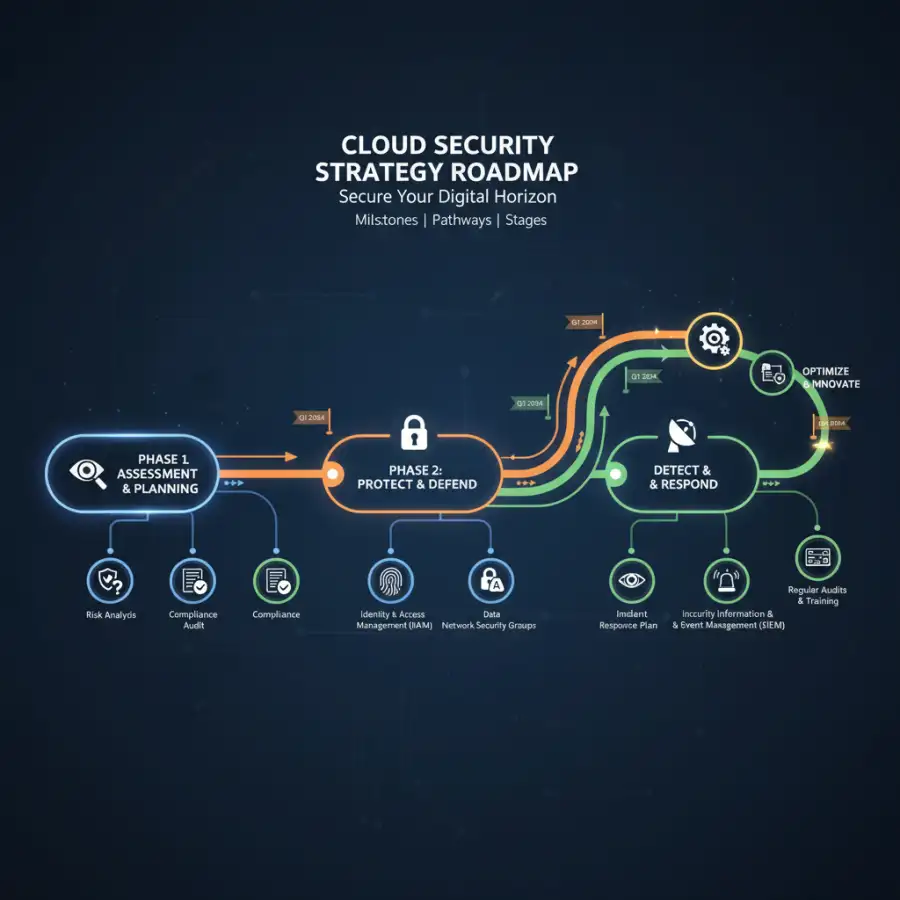
Second, by comprehending the Five Pillars of Protection, you gain the ability to develop a holistic cloud security roadmap. This framework allows you to systematically address all critical areas—ranging from identity management and data protection to network security and incident response—thereby ensuring no stone is left unturned. This structured approach moves your organization beyond reactive firefighting, towards a proactive, strategic defense posture. You can now confidently prioritize investments in tools and practices that directly align with these pillars, effectively building robust layers of security designed to withstand modern threats. A key challenge remains: how can you translate this vast landscape of cloud security services into a concrete, actionable plan that delivers unwavering protection for your unique digital assets, ensuring both business continuity and trust?
Third, understanding the specific security services offered by major cloud providers like AWS and Google Cloud gives you a significant strategic advantage. You can now utilize native tools more effectively, optimizing configurations and integrating them seamlessly into your overall security architecture. This comprehensive knowledge empowers you to ask the right questions, evaluate service offerings with informed scrutiny, and ultimately choose solutions that best fit your organization's unique needs, compliance requirements, and budget. Furthermore, for those evaluating the cost-benefit of various security solutions, this guide provides a clear framework for understanding not just the initial financial outlay, but also the immense long-term value in protecting against potentially devastating breaches.
Ultimately, this guide enables you to become a more informed and proactive decision-maker, transforming cloud security from an intimidating challenge into a manageable and strategic component that strengthens your organization’s digital resilience. Your journey to secure the cloud effectively begins with informed action and continuous vigilance.
Risks, trade-offs, and blind spots
Even with a robust understanding of cloud security, navigating its inherent complexities involves significant risks, crucial trade-offs, and common blind spots that can undermine even the most diligent security efforts. One of the most prevalent risks is misconfiguration. Human error in setting up cloud services, such as improperly configured storage buckets or overly permissive IAM policies, consistently remains a leading cause of data breaches. The ease and speed of deploying resources in the cloud can inadvertently lead to significant security oversights if not carefully managed and audited. It's crucial to ask: what critical dangers lurk in the shadows of cloud security implementation, often overlooked until a breach tragically exposes these unseen vulnerabilities?
Another significant risk revolves around data sovereignty and compliance. Depending on your specific industry and geographical location, regulatory requirements (such as GDPR or HIPAA) strictly dictate where data can be stored and how it must be protected. Cloud providers operate globally, which means ensuring your data resides and is processed in a legally compliant region, coupled with meeting specific data handling mandates, often presents a complex trade-off between operational flexibility and strict regulatory adherence. Failure to comply in this area can result in substantial hefty fines and severe reputational damage.
Insider threats also pose a considerable blind spot for many organizations. While significant attention is often directed towards external attackers, compromised or malicious internal users can use their legitimate access to cause substantial harm. Robust IAM, continuous monitoring, and strict enforcement of the least privilege principle are critical defenses, yet many organizations underestimate the potential for internal actors to bypass controls. This risk extends beyond intentional malice to include simple employee negligence, which can inadvertently create significant vulnerabilities.
Vendor lock-in represents another key trade-off in the cloud. While utilizing a single cloud provider's ecosystem can offer clear integration benefits, it can simultaneously create significant challenges if your organization needs to migrate or adopt multi-cloud strategies, potentially limiting flexibility and increasing costs in the long run. Furthermore, the rapid pace of cloud innovation means that complacency is a particularly dangerous blind spot. Security is never a 'set it and forget it' endeavor; it requires continuous monitoring, proactive adaptation to new threats, and regular updates to policies and configurations. Neglecting this ongoing vigilance can quickly leave your cloud data security vulnerable to newly discovered exploits and evolving attack vectors. Therefore, actively addressing these inherent risks, thoroughly understanding the necessary trade-offs, and consistently seeking out potential blind spots are all essential for maintaining a truly resilient cloud security posture in an ever-evolving threat landscape.
Main points
- Cloud security protects digital assets within cloud environments, fundamentally defined by the crucial Shared Responsibility Model between the cloud provider and the customer.
- The Five Pillars of Protection (Identity and Access Management, Data Protection, Network Security, Logging & Monitoring, and Incident Response) collectively form a comprehensive and robust cloud security strategy.
- Essential tools and technologies include Cloud Access Security Brokers (CASBs), Cloud Security Posture Management (CSPMs), Cloud Workload Protection Platforms (CWPPs), Security Information and Event Management (SIEMs), and Web Application Firewalls (WAFs), all complemented by fundamental best practices such as encryption and Multi-Factor Authentication (MFA).
- Major cloud providers like AWS and Google Cloud offer extensive native security services (e.g., AWS IAM for Identity and Access Management, or GCP VPC Service Controls) specifically designed for customer use and implementation.
- A robust cloud security roadmap involves continuous risk assessment, strategic tool implementation, proactive threat intelligence, and ongoing vigilance.
- Always be aware of common risks such as misconfigurations, complex data sovereignty issues, potential insider threats, and challenges like vendor lock-in.
- Cloud security is an inherently continuous process, demanding constant adaptation to evolving threats, new attack vectors, and technological advancements.
- Effective cloud security successfully transforms potential vulnerabilities into foundational strengths, ensuring business continuity, robust compliance, and long-term trust in the digital age.
Armed with this comprehensive understanding, you are now better equipped to fortify your cloud environment effectively. Take proactive steps to assess your current security posture, utilize the right tools and strategies, and secure your digital future with unwavering cloud data security.