

Your Complete Guide to Online Colleges: Choosing the Right Program in 2025
Discover flexible, quality education by navigating the evolving landscape of online colleges in 2025.

Dreaming of a college degree but need flexibility? Online education in 2025 offers more pathways than ever before, tailor-made for your life.
Feeling overwhelmed by countless programs and accreditations? We'll cut through the noise to help you pinpoint the perfect fit for your ambitions.
Your career goals, lifestyle, and budget all matter. Discover how to strategically evaluate every factor to make an education choice you won't regret.
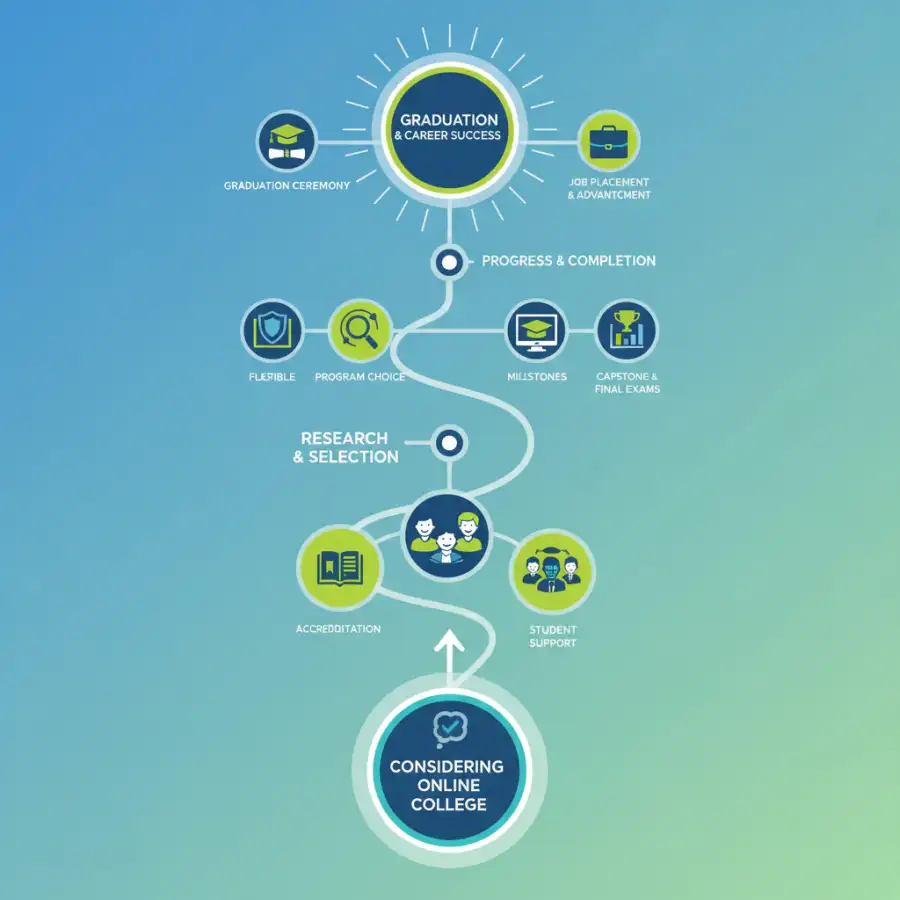
The landscape of higher education is continually shifting, and online colleges have moved from a niche alternative to a mainstream, respected pathway for millions. As we step into 2025, the options are more diverse and sophisticated than ever, making the process of choosing the right program both exciting and, at times, daunting. This guide is your indispensable resource for navigating this dynamic environment. We'll show you how to thoroughly research, evaluate, and select an online college program that perfectly aligns with your career aspirations, lifestyle demands, and financial realities. You'll gain a deep understanding of accreditation, various program types, admissions requirements, and crucial financial aid options. Our aim is to equip you with the knowledge needed to identify the factors most critical for success in online learning, enabling you to make an informed decision that truly invests in your future.
Quick navigation
- The Evolution of Online Education: What's New in 2025?
- Finding Your Fit: Goals, Program Types, and Accreditation
- Key Factors for Choosing the Right Online College
- Navigating Admissions, Costs, and Financial Aid
- Succeeding in Your Online Program: Strategies for Success
- What this means for you
- Risks, trade-offs, and blind spots
- Main points
The Evolution of Online Education: What's New in 2025?
Online education has come a long way from its early days of basic correspondence courses. In 2025, it represents a robust, technologically advanced, and often preferred mode of learning for diverse student populations. The COVID-19 pandemic, while disruptive, served as an accelerant, forcing institutions worldwide to rapidly enhance their digital learning infrastructure and pedagogical approaches. This accelerated development has transformed online colleges into highly sophisticated environments.
Today's online programs feature cutting-edge learning management systems (LMS) that go far beyond simple document sharing. They incorporate interactive multimedia, virtual reality simulations, AI-powered tutoring, and collaborative tools that mimic or even surpass the engagement of traditional classrooms. The quality of instruction has also seen a dramatic uplift, with many top-tier universities now offering fully accredited online degrees taught by the same esteemed faculty as their on-campus counterparts. Furthermore, the stigma once associated with online degrees has largely faded, with employers increasingly recognizing their value. In fact, for many roles, a college degree, regardless of its delivery method, remains a critical benchmark for career progression; a compelling argument can still be made for why a college degree still beats no degree at all.
Beyond the Basics: 2025's online education isn't just about remote lectures. It's about a dynamic digital ecosystem that integrates peer interaction, personalized feedback, and career development resources, all accessible from almost anywhere.
What truly sets 2025 apart is the pervasive integration of flexibility and specialization. Students can now find programs tailored to virtually any schedule, from asynchronous courses that can be completed entirely at one's own pace to synchronous blended models that combine real-time virtual sessions with independent study. This adaptability caters to working professionals, parents, and individuals with unique learning styles, making higher education attainable for a much broader demographic. The focus has shifted from simply delivering content online to creating immersive, supportive, and effective virtual learning communities.
Finding Your Fit: Goals, Program Types, and Accreditation
Before you even begin sifting through countless online college brochures, a crucial first step involves introspection and careful planning. Your decision needs to be rooted in a clear understanding of your personal goals and the educational landscape.
Clarify Your Career and Educational Goals
Why are you pursuing an online degree? Is it for career advancement, a complete career change, personal enrichment, or simply to fulfill a lifelong dream? Clearly defining your objectives will narrow down your search significantly. For instance, if you're aiming for a promotion in your current field, a master's degree or an advanced certification might be ideal. If you're switching careers, a bachelor's degree in a new discipline might be more appropriate. What specific skills do you need to acquire, and how will this degree directly help you achieve them?
Research Program Types and Specialties
Online colleges offer everything from associate degrees to doctorates, and within each, a myriad of specializations. Do you need a liberal arts foundation, a STEM-focused curriculum, or a vocational program? Explore the specific courses offered within your chosen field. Look for programs that emphasize practical skills, hands-on projects, and industry relevance. Don't forget to consider alternative pathways; for specialized knowledge or career pivots, online education certifications can offer focused learning without the time commitment of a full degree program.
Understand Accreditation: Regional vs. National
Accreditation is perhaps the most critical factor when choosing an online college. It signifies that an institution and its programs meet rigorous quality standards. There are two main types:
- Regional Accreditation: This is the gold standard, held by most reputable non-profit colleges and universities. Degrees from regionally accredited institutions are widely recognized by employers and are generally transferable to other universities.
- National Accreditation: Often associated with for-profit and vocational schools. While valid, degrees from nationally accredited institutions may not be as widely accepted for transfer credits or by certain employers and graduate schools.
Always verify an institution's accreditation status through official recognized agencies (e.g., CHEA or the U.S. Department of Education website). Choosing an unaccredited program can render your degree virtually worthless. Is the accreditation status of your chosen institution easily verifiable?
Evaluate Program Structure: Synchronous vs. Asynchronous
Online programs come in various formats. Synchronous courses involve real-time virtual meetings, demanding fixed class times. Asynchronous courses offer more flexibility, allowing you to complete coursework on your own schedule within given deadlines. Many programs offer a hybrid model. Consider your learning style, work schedule, and personal commitments when deciding which structure best suits you.
Key Factors for Choosing the Right Online College
Beyond accreditation and program type, several critical factors contribute to the overall quality and suitability of an online college. Diligent research into these areas will pay dividends in your academic journey.
Faculty Expertise and Engagement
The quality of your instructors is paramount. Research the faculty teaching in your chosen program. Do they have relevant industry experience? Are they published in their fields? Look for evidence of their commitment to online education, such as participation in professional development for virtual teaching. Effective online instructors are skilled at fostering engagement and providing timely, constructive feedback. Do the professors genuinely engage with online students, or is it a more passive learning experience?
Technology and Learning Management System (LMS)
The technology underpinning your online learning experience is crucial. Explore the college's Learning Management System (LMS) – platforms like Canvas, Moodle, Blackboard, or Brightspace. Is it intuitive, reliable, and equipped with tools for collaboration, submission, and communication? Does the institution offer robust technical support that is easily accessible and responsive? A clunky or unreliable LMS can quickly detract from your learning experience.
Student-to-Faculty Ratio and Class Size
While online classes can theoretically accommodate many students, a lower student-to-faculty ratio often indicates more personalized attention and opportunities for interaction. Smaller class sizes can lead to more meaningful discussions and a greater sense of community, even in a virtual setting. Inquire about the typical class size for core courses in your program. Will you be a face in a crowd, or an actively recognized learner?
Career Services and Alumni Network
A degree is an investment in your future career. Investigate the career services offered specifically to online students. Do they provide resume reviews, interview coaching, job placement assistance, or networking events? A strong alumni network can also be an invaluable resource for mentorship and job opportunities. A reputable online college should be committed to helping its graduates succeed professionally.
Reputation and Employer Recognition
While accreditation is key, the overall reputation of the institution matters. Research employer recognition of degrees from your prospective colleges. Look at their rankings in online education, student reviews, and success stories. A strong reputation can open doors and enhance the value of your degree in the job market.
Navigating Admissions, Costs, and Financial Aid
Once you've narrowed down your choices, the practicalities of applying, understanding the financial commitment, and securing funding become your next steps. This phase requires meticulous attention to detail.
Deciphering Admissions Requirements
Online college admissions criteria vary widely. Some programs might require standardized test scores (SAT/ACT/GRE), while others are test-optional or base admissions on previous academic performance and professional experience. Prepare your application materials meticulously, including transcripts, letters of recommendation, and a compelling personal statement that clearly articulates your motivations and suitability for online learning. Pay close attention to deadlines and specific submission instructions for each institution. Does your chosen program have prerequisites you need to fulfill?
Understanding the Total Cost of Attendance
Beyond tuition, consider all potential costs: application fees, technology fees, textbook and materials costs, and any required proctoring fees for exams. While online programs often save on commuting and living expenses, they aren't without their own unique costs. Request a detailed breakdown of all fees from the admissions or financial aid office. Are there any hidden costs you haven't accounted for?
Exploring Financial Aid Options
Online education, while often more affordable than on-campus study, still represents a significant investment. Don't assume financial aid is only for traditional students. Complete the Free Application for Federal Student Aid (FAFSA) to determine your eligibility for federal grants, loans, and work-study programs. Research institutional scholarships, grants from professional organizations, and employer tuition assistance programs. Many online colleges have dedicated financial aid advisors who can guide you through the process. Are you exploring every possible avenue to fund your education?
Veterans Benefits and Tuition Reimbursement
If you're a veteran, investigate whether your chosen online college accepts GI Bill benefits or other military tuition assistance programs. Many institutions also have dedicated resources for military families. Similarly, if you're employed, inquire about tuition reimbursement programs your company might offer; many employers are willing to invest in their employees' education. Have you checked if your service or employer can contribute to your education?
Comparing Student Support Services
Effective student support is vital for success in online learning. Look for colleges that offer comprehensive services tailored to remote students. This includes academic advising, technical support for online platforms, career services, library resources (with digital access), mental health counseling, and tutoring. A robust support system indicates an institution's commitment to its online learners. In the absence of a physical campus, how effectively does the college connect you with the resources you need?
Succeeding in Your Online Program: Strategies for Success
Enrolling in an online college is just the first step. To truly thrive, you need to cultivate specific skills and adopt effective strategies tailored to the virtual learning environment.
Master Time Management and Self-Discipline
Without the fixed schedule and physical presence of a traditional classroom, online learning demands exceptional time management. Create a detailed study schedule and stick to it, treating online classes like any other appointment. Break down large assignments into smaller, manageable tasks. Procrastination is the enemy of the online student. Developing strong self-discipline is crucial, as you are often your own primary accountability partner.
Cultivate Strong Communication Skills
Effective communication is vital in the virtual classroom. Actively participate in online discussions, ask questions via email or virtual office hours, and engage thoughtfully with your peers. Clear, concise writing is essential, as much of your interaction will be text-based. Don't be afraid to reach out to your instructors if you're struggling; they are there to help, but you must initiate the contact.
Develop Digital Literacy and Adaptability
Beyond basic computer skills, strong digital literacy involves navigating various online tools, platforms, and research databases efficiently. Be adaptable to new technologies and learning interfaces. Troubleshooting minor technical issues independently will save you valuable study time. The digital world is constantly evolving; are you ready to evolve with it?
Create Your Ideal Study Space: Designate a dedicated, quiet area for studying. Ensure it's free from distractions, comfortable, and has all the resources you need. A well-organized physical space can significantly enhance your focus in the virtual realm.
Stay Organized and Proactive
Keep track of assignment deadlines, syllabus changes, and communication from instructors. Use digital calendars, project management tools, or even simple to-do lists to stay on top of your coursework. Being proactive means reading ahead, reaching out for clarification before problems escalate, and engaging with optional resources provided by the institution. Don't wait until the last minute to tackle assignments or seek help.
Seek Feedback and Reflect on Your Learning
Regularly seek feedback on your work from instructors and peers. Use constructive criticism to improve your understanding and performance. Take time to reflect on your learning process, identify areas where you excel, and pinpoint challenges. This metacognitive approach allows you to refine your study habits and become a more effective online learner.
What this means for you
Finding the right online college program in 2025 is a profoundly personal decision, but one that promises significant rewards. For you, the prospective student, it offers unparalleled flexibility to pursue higher education without sacrificing existing commitments. Whether you're a full-time professional, a parent, or simply prefer the asynchronous learning model, the breadth of options available today means there's likely a program perfectly tailored to your unique circumstances. This guide offers a roadmap not just to enrollment, but to a fulfilling and successful online academic career. It means you can gain the valuable credentials and knowledge needed to advance your career, pivot into a new field, or achieve personal growth, all on your terms. This level of accessibility and customization empowers you to take control of your educational future, transforming aspirations into tangible achievements, regardless of where you are in life.
Risks, trade-offs, and blind spots
While online colleges offer tremendous advantages, it's crucial to approach them with a clear-eyed understanding of the potential risks, inherent trade-offs, and common blind spots that can impact your success and overall experience.
Risk of Isolation and Lack of Engagement
One of the most significant risks in online learning is feeling isolated. Without the physical presence of a campus, some students struggle to build connections with peers and and instructors. This can lead to a lack of motivation, reduced engagement, and ultimately, higher dropout rates. A common blind spot is underestimating the importance of active participation in online forums and virtual group projects. Are you prepared to proactively seek out and foster online community?
Quality Discrepancies and Diploma Mills
Despite significant advancements, the online education landscape still harbors institutions of varying quality, including unaccredited "diploma mills." Choosing such a program is a major trade-off, as a degree from these entities may be worthless in the job market or for further academic pursuits. A blind spot is failing to thoroughly verify an institution's regional accreditation status and its reputation before enrollment. Is the institution's commitment to academic rigor truly evident in its online offerings?
Procrastination and Lack of Self-Discipline
The flexibility of online learning, while a benefit, can also be a significant risk for those lacking strong self-discipline and time management skills. The absence of fixed class times and direct supervision can lead to procrastination, falling behind on coursework, and ultimately, academic failure. A common blind spot is assuming that online learning is inherently "easier" than traditional schooling, when in fact, it often demands greater personal accountability. Can you consistently motivate yourself without external pressures?

Technical Glitches and Connectivity Issues
Online education is entirely reliant on technology and a stable internet connection. Technical problems, whether with your device, the learning platform, or internet service, can disrupt your learning, cause missed deadlines, and create immense frustration. A blind spot can be underestimating the importance of having reliable tech and a backup plan. What happens if your internet goes out during a live exam or submission deadline?
Perceived Value by Employers (Though Fading)
While the stigma surrounding online degrees has largely diminished, some older or more traditional employers might still hold subtle biases. This is a fading blind spot, but it's worth being aware that showcasing your online degree's rigor and the skills you developed (like self-motivation and digital literacy) can sometimes require extra effort. Researching employer perceptions in your desired field can help mitigate this. Will your chosen program prepare you to articulate the value of your online learning experience?
How do I know if an online college is legitimate?
Always verify its accreditation through official, recognized accrediting agencies listed by the Council for Higher Education Accreditation (CHEA) or the U.S. Department of Education. Avoid institutions without regional accreditation, as their degrees may not be recognized.
Can I get financial aid for online college?
Absolutely. Online college students are eligible for federal financial aid (grants, loans, work-study) by completing the FAFSA. Many institutions also offer their own scholarships, and external scholarships from private organizations are widely available. Employer tuition assistance is another common funding source.
Main points
Choosing an online college in 2025 is a strategic decision that requires careful thought and thorough research. Here are the core takeaways to guide your path:
- Modern Online Education: Online learning in 2025 is sophisticated, featuring advanced technology, diverse program formats, and respected faculty, dispelling old stigmas.
- Define Your Goals: Clearly identify your career and educational objectives to narrow down program choices effectively.
- Accreditation is Paramount: Always prioritize regionally accredited institutions to ensure your degree is recognized and valued by employers and other academic bodies.
- Navigate Funding: Actively explore all financial aid options, including federal aid, scholarships, and employer assistance, to make your education affordable.
- Prioritize Support Services: Look for institutions offering robust online student support, including academic advising, technical assistance, and career services.
- Cultivate Success Skills: Develop strong time management, self-discipline, communication, and digital literacy skills to thrive in a virtual learning environment.
- Be Aware of Risks: Guard against isolation, choose accredited programs carefully, maintain self-motivation, ensure technical readiness, and understand employer perceptions.
Your complete guide to online colleges in 2025 empowers you to make an informed, confident decision. Take the time to research, plan, and prepare, and you'll unlock an educational journey that advances your future. Start building your bridge to success today!