

Best Payroll Software: A Comprehensive Guide to Streamlining Payroll Management
Navigating Features, Pricing, and Performance for Your Business's Needs
Are you tired of the painstaking, error-prone manual payroll process that eats int
o your valuable time and resources? In today's fast-paced business world, inefficient payroll can be a major drain on any company, regardless of its size.
With countless payroll software options promising to simplify your operations, how do you sift through the noise to find the perfect solution that genuinely meets your unique business needs and budget? Making the wrong choice can lead to compliance issues, employee dissatisfaction, and unexpected costs.
From automated tax filings to seamless direct deposits, the right payroll management software can transform your financial operations, ensure compliance, and free up your team to focus on growth. Discover the top contenders and what truly sets them apart.
For any business, from a bustling startup to an established enterprise, managing employee payroll accurately, punctually, and in full compliance with ever-changing regulations is not merely a task; it's a critical operational imperative. The days of painstakingly calculating wages, deductions, and taxes by hand are largely behind us, replaced by sophisticated payroll management software designed to automate these complex processes. However, with an ever-expanding market of solutions, finding the best payroll software that aligns perfectly with your specific requirements, particularly for small businesses, can feel like navigating a labyrinth.
This comprehensive guide aims to demystify the selection process, offering an in-depth look at the leading payroll software providers. We'll explore the essential features that define a top-tier payroll system, examine various pricing models, and provide a balanced overview of the pros and cons of each major contender. Our goal is to equip you with the knowledge needed to compare these robust platforms confidently, enabling you to make an informed decision that enhances efficiency, ensures compliance, and ultimately contributes to your business's financial health and employee satisfaction. Whether you're upgrading from a manual system or seeking a more robust solution, this article will serve as your ultimate resource.
Quick navigation
The Crucial Role of Payroll Software for Modern Businesses
Payroll is far more than just issuing paychecks; it's an intricate financial operation with significant implications for both your business and your employees. In today's dynamic regulatory environment, the necessity of robust payroll software has never been clearer. But why has this technology become so indispensable for businesses of all sizes?
At its core, payroll software brings unparalleled accuracy and efficiency to what can otherwise be a time-consuming and error-prone process. Manual payroll calculations are susceptible to human mistakes, which can lead to overpayments, underpayments, and costly corrections. Automated systems, by contrast, perform calculations with precision, ensuring that employees are paid correctly and on time, every time. This automation extends beyond just wages, handling deductions for benefits, retirement contributions, and garnishments seamlessly. How much time does your team currently spend on manual payroll tasks that could be automated?
Beyond accuracy, compliance is a paramount concern. Payroll involves navigating a complex web of federal, state, and local tax laws, as well as labor regulations. Missteps in tax withholding, reporting, or payment can result in hefty fines and legal headaches. The best payroll software is designed to stay updated with these ever-changing regulations, automatically calculating and filing payroll taxes, and generating the necessary year-end forms (like W-2s and 1099s). This built-in compliance engine acts as a critical safeguard for your business, mitigating the risk of costly penalties and audits.
Furthermore, modern payroll management software extends its benefits to employee satisfaction and engagement. Features like direct deposit offer convenience, while self-service portals empower employees to view pay stubs, update personal information, and manage their tax withholdings. This transparency and ease of access reduce inquiries to HR or finance departments, freeing up valuable staff time. For small businesses, where every minute and dollar counts, the efficiency gains from integrated payroll software are transformative. It allows owners and managers to focus on core business growth initiatives rather than getting bogged down in administrative tasks. It's not just about paying people; it's about investing in a system that supports your entire workforce and keeps your business on solid financial ground.
Key Features to Look for in Payroll Management Software
Choosing the best payroll software isn't just about picking a popular name; it's about identifying a solution that offers the specific functionalities your business needs to operate smoothly and compliantly. With a plethora of options available, what are the non-negotiable features you should prioritize in any payroll management software?
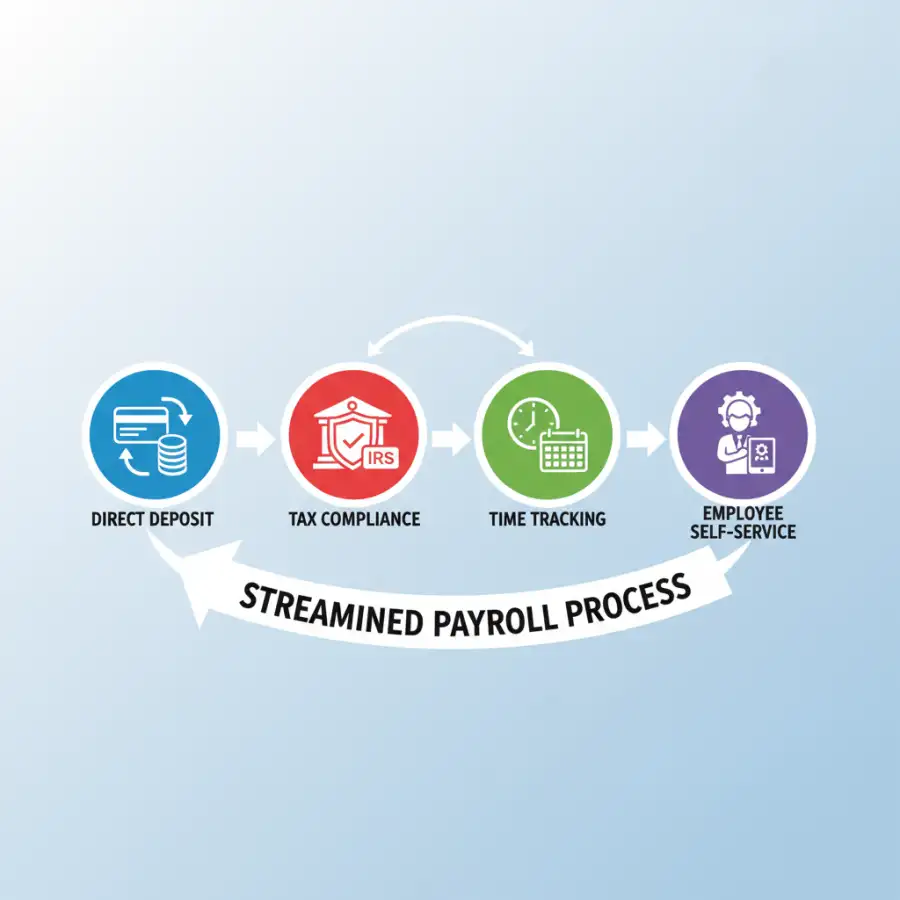
Foremost among these is **Automated Tax Filing and Compliance**. This is perhaps the most critical feature. The software should automatically calculate, withhold, and remit federal, state, and local payroll taxes. It should also generate and file all necessary tax forms (941, 940, W-2, 1099, etc.) on your behalf, ensuring your business remains compliant with tax authorities. This removes a significant administrative burden and reduces the risk of penalties. Does the software proactively track and update tax laws, or is that a manual task?
**Direct Deposit and Payment Options** are essential for employee convenience and efficiency. The best systems offer unlimited direct deposits to multiple bank accounts, allowing employees flexibility in how they receive their pay. Some even offer paycards or check printing services for employees without bank accounts, ensuring everyone is covered. Look for platforms that support flexible pay schedules, whether weekly, bi-weekly, semi-monthly, or monthly.
**Employee Self-Service Portals** empower your workforce. This feature allows employees to securely access their pay stubs, W-2s, update personal information, and manage their direct deposit details without needing to contact HR or payroll staff. This not only boosts employee satisfaction but also significantly reduces administrative overhead for your team. It's a win-win for everyone involved.
**Time Tracking Integration** is crucial, especially for hourly employees. Seamless integration with time tracking systems (or a built-in time tracking module) ensures that hours worked are accurately captured and automatically fed into the payroll calculations. This eliminates manual data entry, minimizes errors, and streamlines the entire pay cycle. For businesses managing varying shifts or projects, this feature becomes indispensable.
**Robust Reporting and Analytics** provide valuable insights into your labor costs, tax liabilities, and overall financial health. The software should offer customizable reports on wages, taxes, deductions, benefits, and more. This data is vital for budgeting, forecasting, and making informed business decisions. Additionally, consider **HR and Benefits Integration**. Many payroll solutions offer integrated HR functionalities, such as onboarding, benefits administration, and performance management, creating a unified platform for all your human capital needs. These comprehensive systems can simplify HR operations and ensure data consistency across departments.
Top Contenders: A Detailed Look at the Best Payroll Software
With a clear understanding of essential features, it's time to explore the leading payroll management software options available today. Each platform offers a unique blend of capabilities, pricing, and target audience, making a detailed comparison vital for selecting the best fit for your business.
Gusto
Gusto is recognized for its user-friendly interface and comprehensive features, making it a favorite among small to medium-sized businesses. It simplifies payroll, benefits, and HR administration into one intuitive platform.
Key Features: Full-service payroll (calculates, files, and pays federal, state, and local taxes), direct deposit, employee self-service portal, new hire reporting, health benefits administration, 401(k) plans, workers' comp, time tracking, expense management, and seamless integrations with popular accounting software like QuickBooks and Xero.
Pricing: Offers tiered plans typically based on a monthly base fee plus a per-employee fee. Plans scale with features, from basic payroll to full-service HR. Free trials are often available.
- Intuitive and easy-to-use interface, even for payroll novices.
- Comprehensive full-service tax filing in all 50 states.
- Excellent integrated HR and benefits administration.
- Strong customer support.
- Can become more expensive for larger teams compared to some competitors.
- Some advanced HR features are reserved for higher-tier plans.
QuickBooks Payroll
Seamlessly integrated with QuickBooks accounting software, QuickBooks Payroll is a natural choice for businesses already using Intuit products. It offers various service levels to cater to different needs.
Key Features: Automated payroll processing, federal and state tax filings, direct deposit, employee self-service, workers' comp administration, HR support (depending on plan), and built-in time tracking. Its strength lies in its tight integration with QuickBooks Online for unified financial management.
Pricing: Offers multiple tiers (Core, Premium, Elite) with increasing features, each typically with a monthly base fee plus a per-employee fee. Promotions and bundled discounts with QuickBooks accounting are common.
- Deep integration with QuickBooks accounting, simplifying financial workflows.
- Multiple plan options to suit different business sizes and needs.
- Automated tax payment and filing.
- Can be more expensive than some standalone payroll solutions.
- Customer support quality can be inconsistent.
- Interface might feel less intuitive for non-QuickBooks users.
ADP Payroll (Run Powered by ADP)
ADP is a leading provider in the payroll industry, offering solutions for businesses of all sizes, from small businesses (Run Powered by ADP) to large enterprises. Its extensive experience and comprehensive offerings make it a strong contender.
Key Features: Full-service payroll, tax filing, direct deposit, HR support, time and attendance, benefits administration, background checks, recruiting services, and robust reporting. Tailored solutions for specific industries and business sizes.
Pricing: Pricing is often customized based on business size and specific feature needs, usually a base fee plus per-employee fee. Requires direct quotes, which can be less transparent upfront.
- Extremely comprehensive features, suitable for growing and larger businesses.
- Strong compliance expertise and tax services.
- Scalable solutions that grow with your company.
- Pricing can be less transparent and requires custom quotes.
- Interface can feel overwhelming for very small businesses.
- Customer service experiences can vary.
Paychex Flex
Paychex is another long-standing leader in payroll and HR services, offering a modular suite of tools that can be customized to fit various business needs. Paychex Flex is their flagship solution for SMBs.
Key Features: Automated payroll processing, tax payment and filing (federal, state, local), direct deposit, employee self-service, comprehensive HR services (onboarding, benefits, learning management), time and attendance, and retirement services. Offers dedicated payroll specialists.
Pricing: Like ADP, pricing is often tailored to the business and features required, typically involving a base fee plus per-employee charges. Transparency can be lower than some competitors, requiring a sales consultation.
- Wide range of HR and payroll features, highly customizable.
- Dedicated payroll specialist for personalized support.
- Excellent for businesses that need scalable HR services.
- Can be expensive for small businesses with basic payroll needs.
- Interface can be complex due to the breadth of features.
- Setup process can be time-consuming.
OnPay
OnPay is a highly-rated payroll solution known for its straightforward pricing, comprehensive features, and excellent customer service, particularly appealing to small and medium-sized businesses.
Key Features: Full-service payroll, automated tax filings, unlimited monthly payroll runs, direct deposit, W-2 and 1099 filing, comprehensive HR features (onboarding, PTO management, compliance), integrated health benefits, 401(k) plans, and robust integrations with accounting software.
Pricing: Typically offers a single, transparent pricing plan with a monthly base fee plus a per-employee fee, making it easy to budget. Free trial available.
- Highly transparent and straightforward pricing structure.
- Excellent customer support and user reviews.
- Comprehensive HR and benefits administration included.
- Unlimited payroll runs without extra fees.
- Less suitable for very large enterprises with highly complex, bespoke requirements.
- Reporting can be less robust compared to some enterprise-level solutions.
What this means for you
Navigating the array of payroll software options ultimately means making a strategic decision that will significantly impact your business's operational efficiency, financial accuracy, and compliance posture. For you, the business owner or financial manager, this isn't just about selecting a tool; it's about investing in a foundational element that underpins your employee relations and fiscal integrity. The choice you make will resonate through every pay period, every tax season, and every employee interaction.
Your primary takeaway should be the critical importance of a thorough needs assessment. Before diving into demos and comparing price tags, you must clearly define your business's specific requirements. How many employees do you have? What are your typical pay frequencies? Do you offer complex benefits or require time tracking integration? Do you need HR support built-in, or just core payroll? Answering these questions will narrow down the field considerably, preventing you from overpaying for features you don't need or, conversely, selecting a system that lacks essential capabilities. Have you accurately mapped out all your payroll and HR process needs?
Furthermore, this detailed comparison means you are empowered to make a value-driven decision, not merely a cost-driven one. While budget is always a consideration, the long-term cost of choosing inadequate software—through compliance fines, missed payments, or excessive administrative hours—far outweighs the savings from a cheaper, less capable system. Look for a balance between features, ease of use, scalability, and transparent pricing. Consider the time saved, the reduction in errors, and the peace of mind that comes with automated tax compliance. The best payroll software will not only process payments but also serve as a strategic partner in your business's growth and stability.
Ultimately, this deep dive ensures that you are equipped to make an informed choice, fostering a payroll process that is seamless, accurate, and compliant. Your employees will appreciate the reliability, and your business will benefit from streamlined operations and robust financial management. Take the time to evaluate, compare, and choose wisely, setting your business up for sustained success.

Risks, trade-offs, and blind spots
While the benefits of modern payroll software are undeniable, navigating its selection and implementation comes with its own set of risks, necessary trade-offs, and often-overlooked blind spots. Being aware of these challenges is crucial for a smooth transition and long-term satisfaction. Are you fully prepared for the potential complexities that lie beneath the surface of seemingly simple solutions?
One significant risk is **underestimating the complexity of implementation**. Even user-friendly software requires careful setup, including migrating employee data, configuring tax information, and integrating with existing accounting or HR systems. A common blind spot is assuming the process will be instantaneous. The trade-off for a comprehensive solution might be a longer initial setup phase. Failing to allocate sufficient time and resources for this can lead to delays, data errors, and frustration, potentially impacting the first few payroll runs. Does your team have the bandwidth and expertise for a proper implementation?
Another crucial trade-off involves **cost versus features**. While there's a temptation to opt for the cheapest solution, this often means sacrificing essential features like advanced reporting, integrated HR tools, or robust compliance support. The blind spot here is focusing solely on the monthly subscription fee without considering the potential indirect costs of a less capable system, such as time spent on manual workarounds, audit risks, or the need to subscribe to additional software. Conversely, overpaying for enterprise-level features that a small business won't utilize is an unnecessary expense. Finding the sweet spot between functionality and budget is a delicate balance.
**Data security and privacy** represent a significant, often underestimated, risk. Payroll software handles highly sensitive employee personal and financial information. A blind spot might be assuming all providers offer the same level of security. You are entrusting a third party with critical data, making it imperative to vet their security protocols, data encryption, compliance with privacy regulations (like GDPR or CCPA), and backup procedures. The trade-off for robust security might be slightly higher costs or stricter access controls, but these are small prices to pay for protecting your business and employees from data breaches.
Finally, a common blind spot is **neglecting the importance of customer support and ongoing training**. Even the most intuitive software will present questions or challenges. Relying solely on self-help articles or forums can be time-consuming. The trade-off for a lower-cost provider might be less responsive or comprehensive customer service. Ensure your chosen provider offers readily accessible support channels (phone, chat, email) and resources for continuous learning. Without proper support, your team might struggle to maximize the software's potential or resolve critical issues quickly, leading to inefficiencies and compliance lapses. Is the support infrastructure robust enough to meet your operational demands?
Main points
Choosing the best payroll software is a strategic decision that demands careful consideration. By keeping these key takeaways in mind, you can confidently navigate the options and select a system that truly benefits your business:
- Assess Your Needs: Clearly define your business size, pay frequency, HR requirements, and desired integrations before you start looking.
- Prioritize Core Features: Automated tax filing, direct deposit, and employee self-service are non-negotiable for efficiency and compliance.
- Evaluate Integration Capabilities: Ensure seamless connection with your existing accounting, time tracking, or HR systems to avoid data silos.
- Understand Pricing Structures: Compare not just the base fees but also per-employee costs and any hidden charges across different tiers.
- Value Scalability: Choose software that can grow with your business, accommodating future hiring and evolving needs without major overhauls.
- Check for Compliance: Verify the software's ability to stay updated with federal, state, and local tax laws automatically.
- Review Support & Training: Assess the quality and accessibility of customer support and available training resources.
- Consider Security: Ensure the provider has robust data security protocols to protect sensitive employee information.
Investing in the right payroll management software is an investment in your business's future. Take the time to research thoroughly, using these insights to select a solution that brings efficiency, accuracy, and peace of mind to your financial operations.