

The Definitive Comparison: Best SaaS Management Platforms for Enterprise Control
Strategic Visibility, Cost Optimization, and Security for Your Digital Ecosystem
Struggling with the escalating costs and security risks of an unmanaged SaaS portfolio, and losing control over your digital assets?
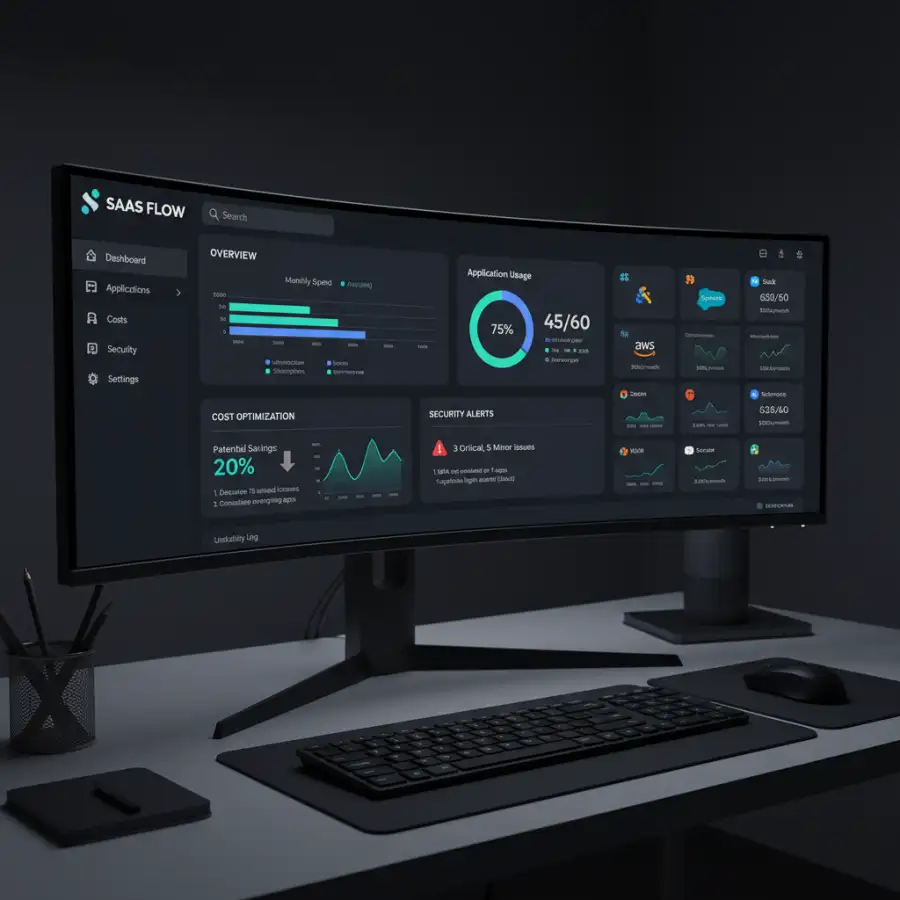
Imagine a unified dashboard providing crystal-clear visibility into every SaaS subscription, user, and spend. Is such comprehensive oversight truly achievable?
Discover expert analysis of leading SaaS management platforms, providing you with the insights to transform chaos into a highly optimized, secure, and cost-effective operation.
In the modern enterprise, the widespread adoption of Software as a Service (SaaS) applications has dramatically transformed the way businesses operate, fostering greater agility and collaboration. From mission-critical CRM systems to specialized project management tools and communication platforms, SaaS has become indispensable. However, this rapid proliferation, often driven by individual departmental needs or even 'shadow IT' initiatives, has inadvertently created a complex challenge: managing the ever-growing and often fragmented SaaS portfolio.
Without robust oversight, organizations frequently encounter significant issues such as redundant subscriptions, underutilized licenses, escalating costs, and critical security vulnerabilities. This is where SaaS Management Platforms (SMPs) step in. These dedicated solutions are engineered to provide a centralized command center for identifying, controlling, optimizing, and securing an organization's entire SaaS ecosystem. This comprehensive guide offers an objective, in-depth comparison of the best SaaS management platforms available today. We will dissect their core features, evaluate their strengths and weaknesses, explore pricing models, and ultimately equip you with the knowledge to select the platform that perfectly aligns with your organizational needs, ensuring both operational efficiency and strategic control.
Quick navigation
- The SaaS Landscape: Understanding the Need for Management Platforms
- Core Capabilities: What to Expect from a Leading SaaS Management Platform
- Market Leaders in Focus: A Comparative Review of Top SaaS Management Platforms
- What this means for you
- Implementing Your Chosen SMP: Best Practices for Success
- Risks, trade-offs, and blind spots
- Main points
The SaaS Landscape: Understanding the Need for Management Platforms
The ubiquity of Software as a Service (SaaS) applications has fundamentally reshaped the modern enterprise. Virtually every department, from marketing and sales to HR and engineering, now relies on a diverse array of cloud-based tools to drive productivity and innovation. While the agility and accessibility of SaaS are significant advantages, their decentralized adoption has given rise to a critical challenge: the dreaded "SaaS sprawl." This phenomenon refers to the rapid proliferation of SaaS subscriptions across an organization, often without centralized IT oversight, leading to a host of complex issues.
SaaS sprawl manifests in several problematic ways. Companies frequently find themselves paying for redundant applications that perform similar functions, holding numerous unused or underutilized licenses, and facing escalating subscription costs due to a lack of visibility and control. Beyond the financial burden, shadow IT introduces significant security vulnerabilities, as unapproved applications may not meet corporate security standards or compliance requirements. Managing user access, provisioning, and de-provisioning across hundreds of disparate applications becomes an administrative challenge, consuming valuable IT resources and increasing operational inefficiencies.
This is precisely where SaaS Management Platforms (SMPs) become indispensable. An SMP provides a centralized hub designed to bring order to this chaos. Its core purpose is to give organizations comprehensive visibility into their entire SaaS portfolio, from discovery and inventory to usage tracking, cost optimization, security governance, and user lifecycle management. Without an SMP, businesses are essentially flying blind, unable to accurately assess their SaaS spend, identify security gaps, or enforce consistent policies across their digital landscape. Can any modern enterprise truly thrive without a clear strategy to manage its burgeoning software ecosystem, ensuring efficiency and mitigating risk?
By offering a single source of truth for all SaaS assets, an SMP empowers IT, finance, and security teams to collaborate effectively, automate routine tasks, and make data-driven decisions. It transforms SaaS from a potential liability into a strategic advantage, enabling organizations to maximize their technology investments and foster a more secure, efficient, and agile operational environment. Understanding how to manage these digital investments is crucial for staying ahead of key financial technology trends and ensuring your organization's long-term success.
Core Capabilities: What to Expect from a Leading SaaS Management Platform
A truly effective SaaS Management Platform (SMP) goes far beyond simply listing applications; it offers a sophisticated suite of capabilities designed to provide comprehensive control and deep insights across your entire SaaS ecosystem. When evaluating potential solutions, it's crucial to understand the foundational features that differentiate a good SMP from an exceptional one. Is a simple inventory list enough, or does your organization require deep, actionable insights to truly optimize its SaaS investments?
1. Holistic SaaS Discovery and Inventory
The bedrock of any SMP is its ability to provide a complete, real-time inventory of all SaaS applications in use. This isn't limited to IT-sanctioned software; it extends to discovering shadow IT applications purchased by individual departments or employees. Top platforms achieve this through various integrations: connecting to single sign-on (SSO) providers, identity providers (IdP), expense management systems, network monitoring, and direct API integrations with popular SaaS apps. This comprehensive discovery ensures no application goes unnoticed, forming a single source of truth for your digital assets.
2. Advanced Cost Optimization and Spend Management
One of the most immediate and tangible benefits of an SMP is significant cost savings. Leading platforms offer granular insights into SaaS expenditure, meticulously tracking license utilization, identifying duplicate subscriptions, and flagging opportunities to reclaim unused licenses. Features include automated renewal alerts, spend forecasting, and the ability to reclaim licenses from inactive users, allowing resources to be reallocated. Some advanced solutions even provide benchmarking data, comparing your SaaS spend against industry averages to ensure you're getting optimal value. This robust financial oversight is paramount for maximizing your budget.
3. Robust Security and Compliance Governance
Each new SaaS application introduces potential security risks. An SMP centralizes security management by offering capabilities to enforce access controls, monitor user permissions (including privileged access), and identify applications that may not meet internal security and compliance standards. It helps ensure adherence to regulations like GDPR, HIPAA, or SOC 2 by providing comprehensive audit trails, data governance features, and the ability to manage data residency requirements. The best platforms integrate with existing security information and event management (SIEM) systems to provide a unified security posture.
4. Automated User Lifecycle Management
Managing user access across numerous SaaS applications can be a time-consuming and error-prone process. A top-tier SMP automates the entire user lifecycle, from onboarding to offboarding. This means new employees gain access to the necessary tools swiftly, while departing employees have their access revoked instantly, minimizing security risks and reclaiming licenses immediately. Automated workflows reduce manual effort, ensure consistency, and improve overall operational efficiency for IT teams.
5. Deep Usage Monitoring and Engagement Analytics
Knowing an application is licensed is different from understanding how it's actually used. Advanced SMPs provide granular insights into user engagement within applications. This includes tracking login frequency, feature adoption, and the intensity of usage. This data is invaluable for identifying underutilized applications that can be decommissioned, optimizing training programs to boost adoption, and informing future purchasing decisions. Understanding true engagement is key to maximizing the ROI of your SaaS investments.
6. Workflow Automation and Integration with IT Systems
Finally, the most powerful SMPs integrate seamlessly with your broader IT ecosystem. This means connecting with your ITSM (IT Service Management) tools (e.g., ServiceNow) to automate support requests related to SaaS, or integrating with HRIS (Human Resources Information Systems) for automated user provisioning based on employee status. Such deep integration and automation reduce manual tasks, minimize errors, and create a highly efficient, interconnected operational environment, ultimately driving greater productivity and strategic agility.

Market Leaders in Focus: A Comparative Review of Top SaaS Management Platforms
The SaaS management platform market is a competitive and evolving space, with several key players offering distinct approaches to tackling SaaS sprawl. While Gartner and other analyst firms often highlight these leaders, understanding their individual strengths and weaknesses is crucial for making the right choice for your specific enterprise. Who truly stands out in the race to simplify SaaS chaos, and for whom?
1. Zylo: The Spend Optimization Specialist
Zylo has established itself as a frontrunner, particularly excelling in SaaS spend optimization. Its platform offers unparalleled visibility into SaaS subscriptions and usage, automatically discovering applications and providing deep analytics on expenditure. Zylo is renowned for helping organizations identify and reclaim unused licenses, negotiate more favorable contracts, and consolidate redundant applications, leading to significant cost savings. Its strong financial integrations make it ideal for enterprises where cost control and procurement are top priorities. However, while it contributes to operations and security, its core strength remains financial oversight, and smaller organizations might find its enterprise-level focus and pricing might be too robust for their initial needs.
2. BetterCloud: The Operations and Security Automation Powerhouse
BetterCloud differentiates itself with a strong emphasis on SaaS operations and security. It offers extensive automation capabilities for user lifecycle management, including onboarding, offboarding, and managing permissions across a vast array of SaaS applications. Its security features are particularly robust, allowing for granular control over data access, policy enforcement, and anomaly detection. BetterCloud is best suited for organizations prioritizing streamlined IT operations, enhanced security governance, and automated workflows across their SaaS stack. While it provides spend insights, its primary focus leans towards operational efficiency and risk mitigation, making it a powerful tool for IT and security teams.
3. Torii: The Comprehensive SaaS Operations Platform
Torii aims to offer a holistic approach to SaaS management, blending strong discovery and spend optimization with robust automation and security features. Its platform provides excellent visibility into application usage and expenditure, coupled with intuitive workflow automation for IT, finance, and business owners. Torii is often praised for its user-friendly interface and its ability to empower diverse teams with the insights they need. This makes it a strong contender for medium to large enterprises seeking an all-in-one solution that covers multiple facets of SaaS management effectively. However, the breadth of its features means that dedicated adoption is needed to fully benefit from its potential.
4. Productiv: The SaaS Intelligence and Engagement Leader
Productiv stands apart with its deep focus on SaaS intelligence, providing granular insights into how applications are *actually* used by employees. It moves beyond simple login data to analyze feature adoption, engagement levels, and collaboration patterns within specific SaaS tools. This intelligence helps organizations maximize the ROI of their SaaS investments by identifying underutilized features, optimizing training, and rationalizing licenses based on real employee engagement. Productiv is ideal for companies that want to drive productivity and collaboration through data-driven insights. While it offers core management capabilities, its strength in analytics is particularly compelling for strategic workforce planning.
5. Flexera One (formerly SaaSOptics/Blissfully): Integrated ITAM and SaaS Management
Flexera One for SaaS Management (built on the foundation of acquisitions like SaaSOptics and Blissfully) brings a comprehensive IT Asset Management (ITAM) perspective to SaaS. It offers powerful capabilities for discovery, optimization, and governance across all software assets, including SaaS. This platform is particularly strong for organizations that require integrated management of both on-premise and cloud software, providing a unified view of their entire software estate. Its strengths lie in its extensive integration capabilities and its ability to handle complex enterprise environments, making it a robust choice for large, diverse IT landscapes. For those tracking the ultimate 2025 guide to fintech, understanding these integrated platforms is key to navigating modern financial operations. Which of these powerful solutions truly aligns with your enterprise's unique blend of operational challenges and strategic aspirations?
What this means for you
The choice of a SaaS Management Platform isn't just a technical procurement decision; it’s a strategic investment that will ripple through every layer of your organization, directly impacting operational efficiency, financial health, and security posture. For you, whether you’re an IT Director, a Chief Financial Officer, a Security Lead, or a CEO, understanding these platforms means gaining a powerful lever for digital transformation. So, how will the insights from this comparison article translate into tangible benefits and strategic advantages for your unique role and enterprise?
For **IT Leaders and Teams**, an SMP means reclaiming control from the sprawling chaos of unmanaged SaaS. It provides the single pane of glass you need to identify all applications, automate time-consuming tasks like user provisioning and de-provisioning, and streamline IT support. This translates into significant time savings for your team, reduces manual administrative burdens, and allows your skilled professionals to focus on more strategic initiatives. You can confidently answer questions about application usage, compliance, and potential redundancies, transforming IT from a reactive support function into a proactive strategic partner. Are you currently equipped to manage the ever-growing demands of your SaaS landscape, or is 'shadow IT' an ever-present concern, draining resources and raising risks?
For **CFOs and Finance Teams**, the implications are directly tied to the bottom line. An SMP offers unprecedented transparency into your SaaS spending, helping to identify and eliminate wasteful expenditures like unused licenses, duplicate subscriptions, and unoptimized renewals. It provides the data needed for accurate budgeting, forecasting, and negotiating better contracts with vendors, leading to substantial, measurable cost savings. This transforms SaaS from a nebulous, ever-increasing expense into a managed, optimized investment, freeing up capital for growth-driving initiatives. This kind of optimization aligns perfectly with the broader trends in modern technology adoption, as evidenced by modern technology adoption across various business sizes.
For **Security and Compliance Officers**, an SMP is an indispensable tool for mitigating risk. By centralizing visibility and control over access permissions, data flows, and application configurations, it significantly strengthens your organization's security posture. It helps ensure compliance with stringent data privacy regulations (like GDPR) by providing comprehensive audit trails, identifying applications that pose risks, and enforcing consistent security policies across all SaaS assets. This translates into a reduced risk of data breaches, improved adherence to industry standards, and greater peace of mind knowing your organization's digital assets are protected.
Ultimately, for **Executive Leadership**, a SaaS Management Platform provides the strategic clarity needed to make informed decisions about technology investments. It offers a single, reliable source of truth for all SaaS assets, enabling a data-driven approach to digital transformation. This translates into enhanced operational efficiency, reduced financial waste, a stronger security posture, and the agility to adapt quickly to market changes. It empowers your organization to maximize the value of every dollar spent on SaaS, ensuring technology truly serves your strategic objectives. How will your chosen platform empower your teams and transform your organization's digital future, rather than simply adding another tool to the stack?
Implementing Your Chosen SMP: Best Practices for Success
Acquiring the best SaaS Management Platform is a significant step, but its true transformative power comes only with thoughtful, strategic implementation. A powerful tool, if poorly deployed, can create more internal friction than it solves. The goal is to embed the SMP as a central, indispensable component of your IT, finance, and security operations, not as an isolated piece of software. So, how do you effectively integrate such a critical system to ensure maximum impact and minimal disruption across your enterprise?
1. Phased Rollout and Stakeholder Engagement
Resist the temptation for a 'big bang' deployment. Instead, opt for a phased rollout, beginning with a pilot program in a specific department or focusing on a subset of your most critical SaaS applications. This allows for fine-tuning, early identification of integration challenges, and gathering invaluable user feedback. Critically, secure strong buy-in from key stakeholders across IT, finance, procurement, and security from the outset. Educate them on the benefits, address their concerns transparently, and involve them in the decision-making process. Their unwavering support is essential for successful, organization-wide adoption.
2. Deep Integration with Core IT Systems
For an SMP to deliver on its promise, it must seamlessly integrate with your existing core IT systems. This includes crucial connections with your Identity Provider (IdP) like Okta, Azure AD, or Google Workspace for automated user provisioning and de-provisioning, your IT Service Management (ITSM) platform (e.g., ServiceNow) for streamlined workflow automation, and your financial systems (ERP, expense management tools) for accurate spend data. These deep integrations automate data flow, eliminate manual reconciliation, and provide a unified operational view, enhancing efficiency and data integrity. Prioritize the most critical integrations first, then expand as your confidence and capabilities mature.
3. Establish Clear Governance Policies and Workflows
A SaaS Management Platform provides the technological backbone, but your organization must define the rules. Establish clear, documented policies for SaaS procurement, approval workflows, usage guidelines, and security configurations. Define explicit roles and responsibilities for managing different aspects of the SaaS portfolio across departments. This robust governance framework ensures consistency, significantly reduces 'shadow IT,' and provides a transparent, efficient process for evaluating and adopting new applications. Without clear policies, even the most advanced SMP will struggle to maintain order and control over a sprawling SaaS environment.
4. Continuous Monitoring and Iterative Optimization
SaaS management is not a one-time project; it is an ongoing, dynamic process. Continuously monitor application usage, analyze spend patterns, and assess your security posture through the SMP's dashboards and reporting tools. Regularly review performance metrics to identify trends, pinpoint inefficiencies, and discover new optimization opportunities. This iterative approach allows you to adapt swiftly to changes in your SaaS landscape, reclaim underutilized licenses, renegotiate contracts effectively, and ensure your investment consistently delivers maximum value. Are you prepared to move beyond installation and truly embed SaaS management as a core operational discipline across your enterprise, continuously refining your approach?
5. Comprehensive Training and User Education
Finally, invest in robust and ongoing training and education for your IT staff, financial teams, and even end-users. Ensure they fully understand how to use the platform, why it's important for the organization, and how it directly benefits them in their daily roles. Provide easily accessible documentation, clear tutorials, and responsive support channels. A well-trained and informed user base is not only more likely to adopt the platform effectively and contribute to its success but will also become internal champions for better SaaS management practices throughout the organization.
Risks, trade-offs, and blind spots
While the allure of centralized SaaS management is strong, embarking on this journey without a clear-eyed understanding of the potential risks, inherent trade-offs, and common blind spots can lead to costly missteps and operational frustrations. No technological solution is a panacea, and recognizing its limitations is as vital as appreciating its strengths. What are the often-overlooked difficulties that organizations might encounter?
One significant risk is the complexity of integration. Despite vendor promises of seamless connectivity, integrating a new SMP with a diverse array of existing SaaS applications, identity providers, and financial systems can be surprisingly intricate and time-consuming. Data mapping issues, API limitations, and vendor-specific nuances often lead to unexpected delays, require custom development, and can incur significant additional costs. The vision of a unified view might come at the expense of intricate, resource-intensive technical work.
Another crucial trade-off is the potential for **vendor lock-in**. Once your organization becomes deeply embedded within a specific SMP's ecosystem, migrating to an alternative provider in the future can be an incredibly difficult and expensive undertaking. Exporting historical data, retraining staff, and reconfiguring numerous integrations can be a monumental task, potentially limiting your flexibility if your needs evolve, if the vendor's service quality deteriorates, or if more innovative solutions emerge. While SMPs aim to give you control over your SaaS, paradoxically, you become more reliant on the SMP vendor itself.
A common blind spot is **resistance to change and user adoption challenges**. Centralizing SaaS management often entails taking away autonomy from individual departments or users who might have previously procured applications independently. This can breed resistance, fear of increased bureaucracy, or a perception of IT overreach. Without careful change management, transparent communication about benefits, and demonstrating clear value to end-users, adoption can falter, rendering even the most powerful platform ineffective. This resistance underscores the critical human element often underestimated in technology deployments. Beyond the promising dashboards and automated workflows, are you truly prepared to navigate the hidden complexities and human elements inherent in a large-scale SaaS management deployment?
Furthermore, there's the risk of over-reliance on tools and underestimation of human oversight. An SMP provides invaluable data and automation capabilities, but it doesn't eliminate the need for skilled IT, finance, and security professionals to interpret insights, define strategic policies, and make nuanced decisions. Believing the platform will magically solve all problems without dedicated human effort is a dangerous blind spot that can lead to missed opportunities and unaddressed issues. The platform is an enabler, not a replacement for human intelligence and strategic thinking. Finally, concerns around the data privacy and security of the SMP itself are paramount. Entrusting a single platform with sensitive data about all your SaaS applications, users, and spending requires absolute confidence in its own security posture. A breach of the SMP could have catastrophic consequences, as it holds the keys to your entire digital kingdom. Thorough due diligence on the SMP vendor's security certifications and practices is non-negotiable, especially considering the broader implications within the ultimate 2025 guide to fintech.
Main points
Selecting and implementing the ideal SaaS Management Platform is a critical strategic decision that can profoundly impact your organization's efficiency, insights, and security. By thoroughly understanding the diverse options and their nuances, you can make a choice that truly aligns with your operational realities and strategic ambitions. Here are the core takeaways to guide your decision-making process:
- SaaS sprawl creates significant challenges in terms of cost, security, and operational efficiency for modern enterprises.
- SaaS Management Platforms (SMPs) are essential for gaining comprehensive visibility, control, and optimization across your entire SaaS portfolio.
- Top SMPs offer robust capabilities in discovery, cost optimization, security governance, automated user lifecycle management, and deep usage analytics.
- Market leaders like Zylo, BetterCloud, Torii, Productiv, and Flexera One each have distinct strengths, catering to different enterprise priorities and needs.
- Successful implementation requires a phased rollout, strong stakeholder buy-in, deep integration with existing IT systems, clear policy development, and continuous monitoring.
- Be acutely aware of potential risks, including integration complexities, vendor lock-in, internal resistance to change, and the need for ongoing human oversight.
- Your organization's unique size, industry, pain points, and growth trajectory should be the primary drivers of your SMP selection.
- The right SMP transforms SaaS from a potential liability into a powerful strategic asset, driving measurable ROI through cost savings, enhanced security, and improved operational agility.
Don't let the complexity of your SaaS ecosystem hold your organization back. By strategically investing in and implementing a robust SaaS Management Platform, you can gain the control, visibility, and efficiency needed to thrive in today's cloud-first world. The future of enterprise technology demands intelligent SaaS management; are you ready to lead the charge and empower your organization?