

EPP vs. EDR vs. MDR: What's the Difference?
A Guide to Endpoint Security Technologies
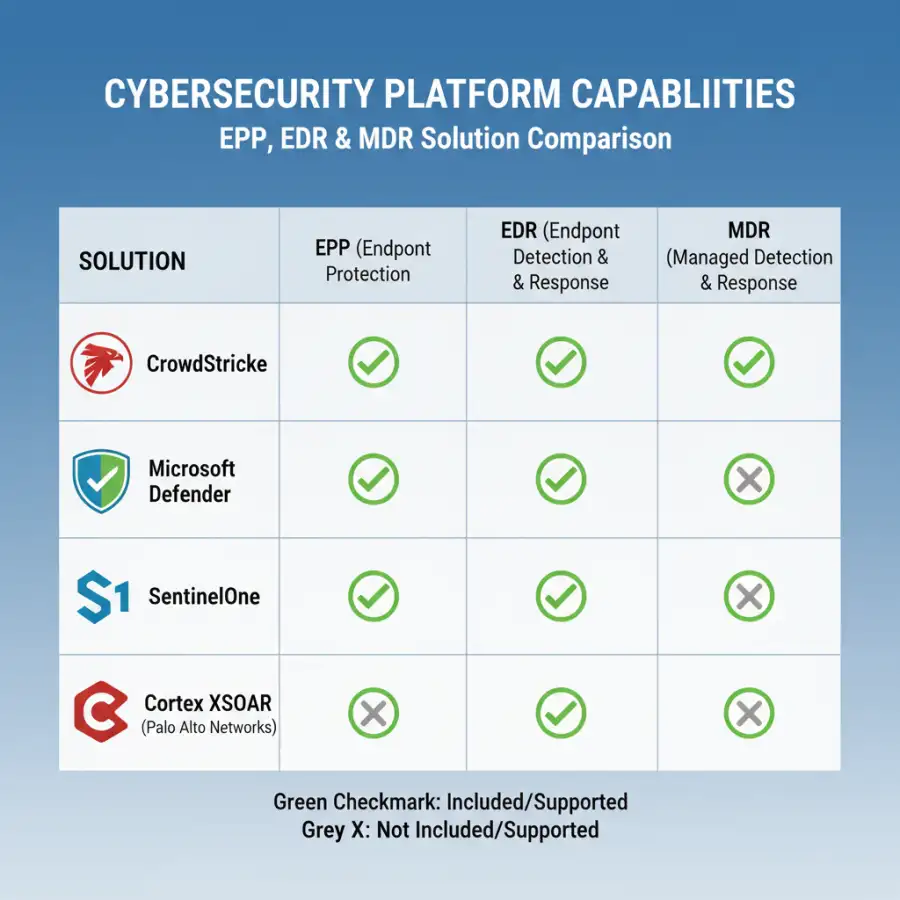
Cybersecurity is like a minefield. Acronyms and technologies change constantly. Understanding EPP, EDR, and MDR is important for protecting your digital assets.
Are you struggling with the latest threats and security solutions? This guide breaks down the complexities. You can then make informed decisions for your organization.
From prevention to advanced threat hunting, learn how these technologies work together. You can build a strong security posture.
Securing your endpoints is critical in today's threat landscape. This guide compares three endpoint security technologies: Endpoint Protection Platforms (EPP), Endpoint Detection and Response (EDR), and Managed Detection and Response (MDR). Knowing the differences between these solutions is key to building a strong cybersecurity strategy.
Quick navigation
EPP: The Foundation of Endpoint Security
Endpoint Protection Platforms (EPP) are the basis of endpoint security. They offer preventative security measures. These measures stop threats before they run. EPP solutions usually include antivirus, anti-malware, firewall, and intrusion prevention. Think of EPP as the first line of defense, like a security guard.
EPP prevents known threats from entering your system. They use signature-based detection, behavioral analysis, and other methods. These methods identify and block harmful activity. These platforms are simple to deploy and manage. This makes them a key part of any organization's security. But, is this enough in today’s complex threat environment?
EDR: Detecting and Responding to Threats
Endpoint Detection and Response (EDR) solutions improve endpoint security. EDR focuses on detecting and responding to threats. These threats have bypassed the first security layers. EDR solutions constantly monitor endpoint activity. They collect data and show potential threats.
EDR tools offer advanced features. These include threat hunting, incident response, and forensic analysis. They use machine learning and behavioral analysis. They find suspicious activity that might mean a compromise. When a threat is found, EDR solutions respond. They isolate the endpoint, alert security teams, and provide information. This information is used to investigate and fix the threat. Does your security team have the time and expertise to properly utilize EDR?
MDR: The Comprehensive Approach
Managed Detection and Response (MDR) is a fully managed service. It provides 24/7 threat detection, incident response, and threat hunting. MDR solutions combine EDR with the skills of security professionals. Think of MDR as having a security team protecting your organization around the clock.
MDR providers use EDR technology. They monitor and analyze endpoint data. They investigate alerts, provide incident response, and proactively hunt for threats. MDR services offer a complete approach to endpoint security. They give organizations the skills and resources needed to manage their security. Is MDR the ultimate solution, or are there hidden drawbacks?
What this means for you
Choosing the right endpoint security solution can be complex. EPP, EDR, and MDR offer different levels of protection. They also need different resources and skills. The best approach depends on your organization's needs, risk tolerance, and budget. Knowing the differences between these solutions is important for making a good decision.
MDR might be a good choice if you are a small to medium-sized business. You may have limited IT resources. Large businesses with experienced security teams might choose EDR. They could also build their own in-house capabilities. A layered approach to security is recommended, no matter your choice.
Risks, trade-offs, and blind spots
Each solution has trade-offs. EPP provides essential protection, but it might not stop all attacks. EDR offers advanced detection and response. But, it needs skilled people to work well. MDR provides complete protection. However, it can be more expensive than other options.
Blind spots can exist in any security solution. EPP may miss new exploits or advanced threats. EDR can create many alerts. This requires careful monitoring and analysis. MDR relies on the provider's skills and effectiveness. Are you prepared to manage these inherent risks?
Choosing the Right Solution: Key Considerations
Consider these factors when choosing an endpoint security solution:
- Your organization's size and complexity: MDR might be best for small businesses. Larger businesses may have the resources to manage EDR internally.
- Your security budget: EPP is usually the most affordable. EDR is next, and MDR is the most expensive.
- Your internal expertise: Do you have a skilled security team? Can they manage EDR or hunt for threats?
- Compliance requirements: Some industries have rules. These rules require a specific type of solution.
- Threat landscape: Assess the threats your organization might face.
Main points
- EPP provides a foundation of preventative security measures. These measures include antivirus, firewall, and intrusion prevention.
- EDR focuses on finding and responding to threats. These threats bypass preventative measures. EDR provides threat hunting and incident response.
- MDR offers a fully managed service. It has 24/7 threat detection, incident response, and threat hunting. It combines technology with expert human analysis.
- EPP is the most basic and affordable. MDR is the most complete and costly.
- EDR needs skilled people to work well. MDR provides the expertise needed to manage your security.
- Think about your budget, in-house expertise, and industry rules. Then, choose a solution.
- A layered approach to security gives the best protection. You can combine EPP, EDR, and/or MDR.
- Review and update your security strategy regularly. Adapt to the changing threat landscape.
Choosing the right endpoint security solution is a key decision. It can greatly impact your organization's security. By understanding EPP, EDR, and MDR, you can make an informed decision. This decision can meet your needs and protect your assets. Contact a cybersecurity expert today. Discuss your organization’s security needs.