

Your Guide to Earning a Full Online College Degree
A comprehensive look at online degree programs, from feasibility to career impact.
Do you want a college degree, but can't attend classes on campus? Online education makes this possible.
You can now earn a full online college degree from home. Is it right for you? How do you do it?
This guide covers everything you need to know about earning an online degree. It helps you make a good decision and find the best program.
Earning an online college degree has changed in recent years. Online programs are no longer a less credible option. They are a mainstream way for people worldwide to get a higher education. With technology advances and more acceptance of online learning, a full online college degree is a good option for many students, especially working adults.
Quick navigation
What this means for you
Earning an online college degree can change your life. It can lead to a better career, more money, and personal growth. What does this mean for you, the student?
First, it offers flexibility. Online programs let you study at your own speed, on your own schedule. This is good for working adults, parents, and anyone with other commitments. You can access course materials and lectures anytime. This makes it easier to balance your studies with other responsibilities.
Second, online degrees offer many program options. If you are interested in business, technology, healthcare, or the arts, there is likely an online degree program for you. Many universities and colleges offer many online programs. This lets you study almost any field online.
Also, online degrees can be more affordable than programs on campus. Tuition costs vary. Many online programs offer competitive prices and flexible payment options. You can also save money on commuting, housing, and other on-campus costs.
Types of Online Degrees Available
There are many types of online degrees. Knowing the different types is important for finding a program that fits your goals. What specific online degree options are there?
The most common types of online degrees are:
- Associate Degrees: This is a two-year program. An associate degree can help you get a bachelor's degree or prepare you for a job in a specific field.
- Bachelor's Degrees: These are four-year programs that give you a good education in a field. They open doors to many jobs. They are often the most sought-after type of degree for career advancement.
- Master's Degrees: These programs are for people who already have a bachelor's degree. Master's programs usually take one to two years and let you specialize in a field.
- Doctorate Degrees: This is the highest level of education. Doctoral programs require years of study and research. People who want advanced research or leadership roles often pursue them.
- Certificates and Diplomas: These shorter programs focus on specific skills or knowledge. They can improve your resume or prepare you for a career change.
Online degree programs are also available in different formats. These include synchronous and asynchronous courses. Synchronous courses involve real-time interaction with instructors and classmates. Asynchronous courses let you complete your work at your own speed.
Accreditation: The Key to a Valid Degree
When choosing an online degree program, accreditation is very important. Why is accreditation so important?
Accreditation is when an agency checks if a college or university meets certain standards. A degree from an accredited school is recognized by employers and other schools. This makes it easier to transfer credits, get more education, and get a job.
There are two main types of accreditation: regional and national. Regional accreditation is usually more respected. It often has stricter standards. National accreditation is usually for vocational or specialized schools. When looking at programs, make sure the school and its program are accredited by a recognized agency.
For more information on online learning, see Navigating the Digital Campus: Your Ultimate Guide.
Duration and Program Structure
The length and structure of an online degree program can vary. It depends on the degree, the school, and the program. How are these programs usually structured? How much time should you expect to spend?
Associate Degrees: These programs usually take two years of full-time study. They often include general education courses and courses in your field.
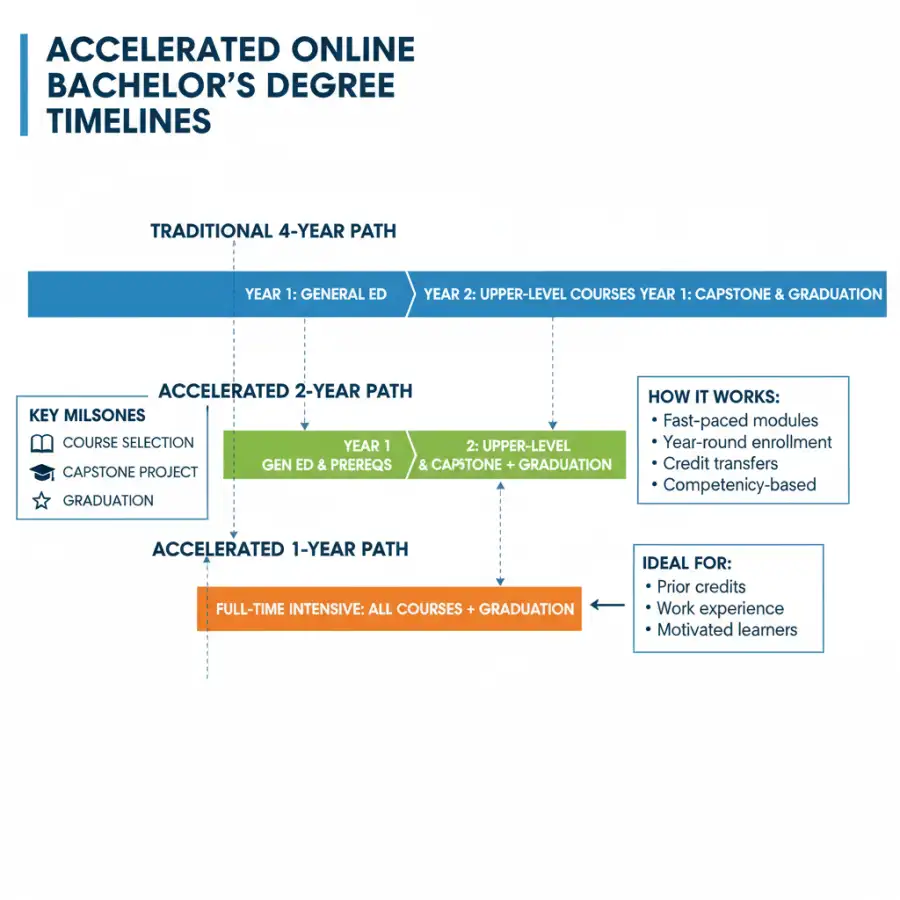
Bachelor's Degrees: Most bachelor's degree programs take four years of full-time study. Some fast online programs let you finish your degree faster, like in three years. You might be able to transfer credits from previous college experience.
Master's Degrees: Master's programs usually take one to two years. These programs often require a thesis or project, as well as courses in your field. Part-time options may take longer.
Doctorate Degrees: Doctoral programs are the longest. They often take five or more years. They involve many courses, research, and a dissertation.
Online programs usually include video lectures, readings, discussion forums, and assignments. Some programs may also require virtual labs, simulations, or internships. Online learning lets students access materials when they want.
Cost and Financial Aid
The cost of earning an online college degree can vary. How can you pay for your education?
Tuition is a big part of the cost. Prices vary by school and program. Public universities usually have lower tuition rates than private schools. The length of the program also affects the total cost. You also need to consider fees for technology, course materials, and online resources.
Fortunately, you can get financial aid to help pay for these costs. Federal student aid, including grants and loans, is a main source of funding. To apply, fill out the Free Application for Federal Student Aid (FAFSA). Many online programs also accept private loans and offer scholarships.
Be sure to explore all funding options. Create a budget to figure out how to pay for your online degree.
Risks, trade-offs, and blind spots
There are many benefits to earning an online college degree. It's also important to know about the potential risks and trade-offs. What are the challenges you might face?
One challenge is the need for self-discipline and time management. Online learning requires you to be motivated and manage your time well. You need to make your own schedule, meet deadlines, and stay on track without a classroom. Some students find it hard to stay focused without social interaction and in-person support.
Another trade-off is the lack of face-to-face interaction with instructors and classmates. Online programs have virtual communication tools. Some students may miss the chance for direct interaction and immediate feedback. You can fix this by participating in online discussions, attending virtual office hours, and getting help from others.
Also, not all online programs are equal. Some programs may not be as good as traditional programs. It's important to research the school, program, and accreditation before enrolling. Consider the teachers' qualifications, course content, and student support services.
It’s also important to consider potential technology problems. You need reliable internet, a working computer, and technical skills for online learning. Technical problems can disrupt your studies. It’s important to have a backup plan and access to tech support.
Choosing the Right Program: A Step-by-Step Guide
Choosing the right online degree program is a big decision. You need to do research and think about your goals. How do you choose?
Here’s a step-by-step guide to help you choose the right program:
- Define Your Goals: Decide what you want to do for your career. Identify the skills and knowledge you need to succeed.
- Research Programs: Look at different programs that match your goals. Consider the degree type, curriculum, and options. Use online resources, school websites, and program reviews to get information. If you're interested in online programs, you might want to look at Online School Programs: Your College and Career Guide.
- Check Accreditation: Make sure the school and program are accredited by a recognized agency. This is important for the value of your degree.
- Evaluate the Program Structure: Consider the program's flexibility, course formats, and technology requirements. Make sure the program fits your lifestyle and how you learn.
- Assess Student Support Services: Look at the student support services, like advising, career counseling, and tech support. These services can help you succeed.
- Compare Costs and Financial Aid Options: Research tuition, fees, and financial aid. Explore scholarships, grants, and loans to find out how to pay for your education.
- Read Reviews and Talk to Students: Read student reviews. Talk to current students or alumni to learn about the program's quality, teachers, and overall experience.
- Make a Decision: After thinking it over, choose the program that best fits your needs and goals.
Main points
Earning an online college degree is a big decision. You should now be ready to start or continue your education. Here are some key points:
- Online degrees offer flexibility. You can study at your own speed and schedule.
- There are many online degree programs, including associate, bachelor's, master's, and doctoral degrees.
- Accreditation is important for the value of your degree.
- Costs vary. You can get financial aid, including grants, loans, and scholarships.
- You need self-discipline, time management, and reliable technology to succeed in online learning.
- Research programs. Check accreditation. Assess program structure and support services when choosing a program.
Earning an online college degree can change your life. Think about your goals, research your options, and make a decision that will lead to success. With the right program and effort, you can achieve your goals. Are you ready to take the next step?