

EPP vs EDR vs MDR: A Comprehensive Guide to Endpoint Security Solutions
Understanding the differences and choosing the right cybersecurity tools
Cybersecurity is complex. The acronyms can be overwhelming. EPP, EDR, and MDR are important tools to protect your digital assets. What do they mean?
This guide explains the key differences between these endpoint security solutions. It helps you understand their specific functions. You can make informed decisions about your cybersecurity strategy.
You need to understand these tools. It is critical in today's threat landscape, whether you are an IT professional or new to cybersecurity.
Staying ahead of threats requires a good understanding of security solutions. This guide focuses on endpoint security. It explains the differences between EPP, EDR, and MDR. It also covers their relationship with SIEM. These solutions are crucial for protecting your digital assets. You can make informed decisions about your security. You can also improve your ability to find, respond to, and lessen cyber threats.
Quick navigation
What this means for you
Understanding EPP, EDR, and MDR can improve your organization's security. Knowing how these solutions work can help you protect your data. It can also reduce the risk of cyberattacks. Choosing the right technologies can help, whether you are a small business owner or a large enterprise. It can mean the difference between keeping your business running and suffering damage. Understanding these technologies helps you make informed decisions. You can budget for cybersecurity and choose security vendors. This guide gives you the knowledge to navigate endpoint security. You can make strategic decisions for your needs.
EPP: Endpoint Protection Platform
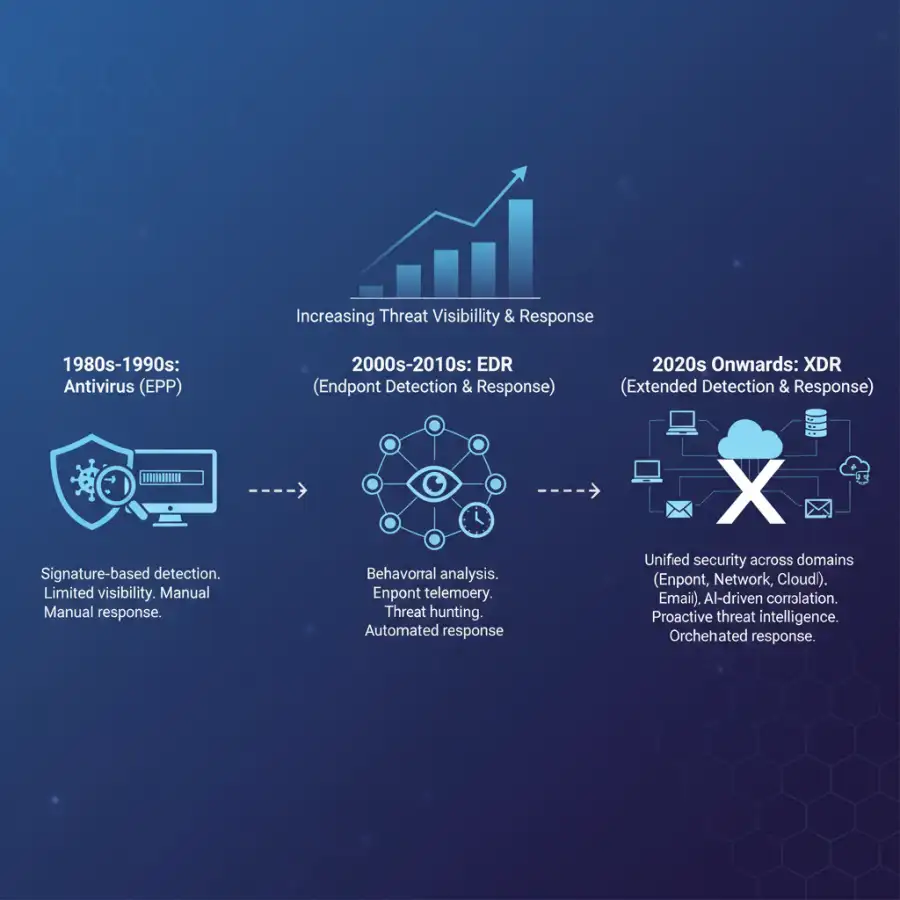
An Endpoint Protection Platform (EPP) is a set of security tools. It protects endpoints, such as computers, laptops, and servers, from threats. Think of EPP as your first line of defense. It includes antivirus software, firewalls, and intrusion prevention systems. EPP solutions focus on stopping threats from entering your system. They use signature-based detection, behavioral analysis, and real-time threat intelligence. Is your current EPP solution adequate?
Key features of EPP include:
- Antivirus/Anti-malware: Finds and removes malicious software.
- Firewall: Monitors and controls network traffic.
- Intrusion Prevention System (IPS): Finds and blocks malicious activities.
- Web filtering: Restricts access to malicious websites.
- Application control: Manages which applications can run on endpoints.
EPP solutions are essential for basic endpoint security. They provide a foundation for protecting your devices and data.
EDR: Endpoint Detection and Response
Endpoint Detection and Response (EDR) improves endpoint security. EDR focuses on finding and responding to threats that bypass initial security measures. EDR solutions constantly monitor endpoints. They collect data and provide tools for threat hunting and incident response. Are you prepared to find and respond to advanced threats?
Key features of EDR include:
- Continuous monitoring: Real-time monitoring of endpoint activities.
- Threat detection: Uses behavioral analysis and machine learning to find threats.
- Incident response: Provides tools for investigating and fixing security incidents.
- Threat hunting: Enables proactive searching for hidden threats.
- Forensics: Collects data for detailed analysis of security incidents.
EDR solutions are crucial. They help organizations find and respond to advanced threats, such as zero-day exploits and advanced persistent threats (APTs).
MDR: Managed Detection and Response
Managed Detection and Response (MDR) is a security service. It provides 24/7 threat detection, incident response, and threat hunting. It often uses EDR technology. Think of MDR as an outsourced security team. It uses technology and human expertise to protect your organization. MDR providers handle the day-to-day security operations. This lets your IT staff focus on other priorities. Do you have the resources to constantly monitor threats?
Key features of MDR include:
- 24/7 monitoring and threat detection: Continuous monitoring of your environment.
- Incident response: Manages and fixes security incidents.
- Threat hunting: Proactively searches for hidden threats.
- Security expertise: Provides access to experienced security analysts.
- Reporting and compliance: Helps meet regulatory requirements.
MDR is ideal for organizations that lack resources or expertise. It offers a cost-effective way to improve your security and reduce cyberattacks.
The Role of SIEM
Security Information and Event Management (SIEM) systems are important in cybersecurity. They are a central hub for security data and analysis. SIEM solutions collect and analyze security logs from different sources. This includes EPP and EDR systems, network devices, and cloud services. SIEM gives you real-time visibility into your security. It helps you find and respond to threats. Can your current systems provide a single view for all security events?
Key features of SIEM include:
- Log collection and management: Collects and stores security logs.
- Security analytics: Analyzes log data to find threats.
- Incident response: Provides tools for investigating and responding to security incidents.
- Compliance reporting: Helps meet regulatory requirements.
- Threat intelligence integration: Integrates with threat intelligence feeds for better threat detection.
SIEM is essential for organizations that need to monitor their entire security. It also helps them meet regulatory requirements. It can integrate with EPP, EDR, and MDR solutions. This provides a full view of your security.
EPP vs EDR vs MDR: Key Differences
The main differences between EPP, EDR, and MDR are their functions and scope. EPP focuses on prevention, EDR on detection and response, and MDR on providing managed security services. SIEM is a central system that integrates all security data. Which approach fits your needs?
Here’s a breakdown:
- EPP: Focuses on preventing threats from entering the system. It is the first line of defense. It provides features like antivirus and firewalls.
- EDR: Detects and responds to threats that bypass EPP. It monitors endpoints for suspicious activities. It also provides tools for threat hunting and incident response.
- MDR: Provides managed security services. These include 24/7 threat detection, incident response, and threat hunting. It combines technology with human expertise.
- SIEM: A central system. It collects and analyzes security logs from different sources. It provides real-time visibility and threat detection.
Understanding these differences helps you choose the right solutions.
Risks, trade-offs, and blind spots
Each security solution has risks, trade-offs, and potential blind spots. Understanding these is important when making decisions about your security strategy. Are you aware of the downsides of each solution?
- EPP: EPP solutions may not always catch advanced threats. New or sophisticated malware can bypass signature-based detection.
- EDR: EDR solutions can generate a lot of alerts. Skilled security analysts are needed to investigate and respond.
- MDR: Using an MDR provider means trusting an outside party with your data and security. There can also be communication gaps and a reliance on the provider's expertise.
- SIEM: SIEM systems need resources to implement and maintain. This includes skilled people. It also requires constant adjustments to reduce false positives.
Assess these factors carefully. You can select and implement security solutions to lower risks.
Main points
Choosing the right combination of EPP, EDR, MDR, and SIEM is essential for a strong cybersecurity strategy. Here’s a summary:
- EPP provides basic protection against common threats.
- EDR improves security. It finds and responds to advanced threats that bypass EPP.
- MDR offers managed security services. These include 24/7 monitoring and incident response.
- SIEM provides central security monitoring and analysis. It collects logs from different sources.
- Understanding the differences helps you make informed decisions about your security.
- Consider your organization's resources, threats, and compliance needs. You can then select security solutions.
- Regularly review and update your security strategy. You can then stay ahead of threats.
- Further reading can help you stay informed about the latest cybersecurity trends.
You can reduce cyberattacks. You can protect your assets. Implement a layered approach to cybersecurity. This includes EPP, EDR, MDR, and SIEM. Contact a cybersecurity expert. They can assess your security. They can also create a security plan for you.