
EPP vs EDR vs XDR: A Comprehensive Guide to Endpoint Security Solutions
Understanding the differences between EPP, EDR, and XDR is crucial for modern cybersecurity.
Cyberattacks are a major threat in today's digital world, requiring strong security. The world of endpoint security can seem complex.
Understanding the differences between EPP, EDR, and XDR is the first step to protect your digital assets.
This guide explains what each solution does. It will help you make good choices to protect your organization.
The cybersecurity world is always changing. New threats appear often. Endpoint security solutions are important for defense. They protect devices like computers and servers from attacks. This guide compares EPP (Endpoint Protection Platform), EDR (Endpoint Detection and Response), and XDR (Extended Detection and Response). You will understand what they do and how they fit into a complete security plan. We will also talk about related technologies like MDR (Managed Detection and Response) and SIEM (Security Information and Event Management).
Quick navigation
What is EPP?
Endpoint Protection Platforms (EPP) are the basic level of endpoint security. EPP solutions focus on stopping threats from entering the system. They use different technologies to block known malware, prevent exploits, and control access to endpoints.
The main job of EPP is to prevent security breaches. Common features include:
- Antivirus and anti-malware: Find and remove known threats.
- Firewall: Control network traffic to and from endpoints.
- Web filtering: Block access to harmful websites.
- Application control: Manage which applications can run on endpoints.
- Data loss prevention (DLP): Prevent important data from leaving the organization.
Think of EPP as the first line of defense, like a security guard at the front door. Is it enough on its own? Not always. EPP solutions mainly focus on prevention. They may not find advanced attacks that bypass initial defenses. However, EPP is important for setting a basic security level.
What is EDR?
Endpoint Detection and Response (EDR) solutions go further than prevention. They focus on finding and responding to threats that have already bypassed the initial defenses. EDR offers advanced threat detection, investigation, and response. It constantly watches endpoints, collecting data on activities and events. EDR's main goal is to identify and stop threats quickly.
How does EDR work? It collects data from endpoints. This data can include:
- Process monitoring: Track processes running on endpoints.
- File activity monitoring: Watch file creations, changes, and deletions.
- Network monitoring: Analyze network connections and traffic.
- Behavioral analysis: Identify unusual or suspicious activities.
Is this level of insight important? Yes. EDR allows security teams to investigate incidents, find the cause of attacks, and take steps to fix them. EDR solutions give a deeper understanding of security incidents. They collect data at the endpoint level. This offers context that traditional security tools often lack. What happens when an alert is triggered? EDR solutions enable a quick response. This allows security teams to stop the threat and prevent more damage. This is critical for reducing the impact of a breach.
What is XDR?
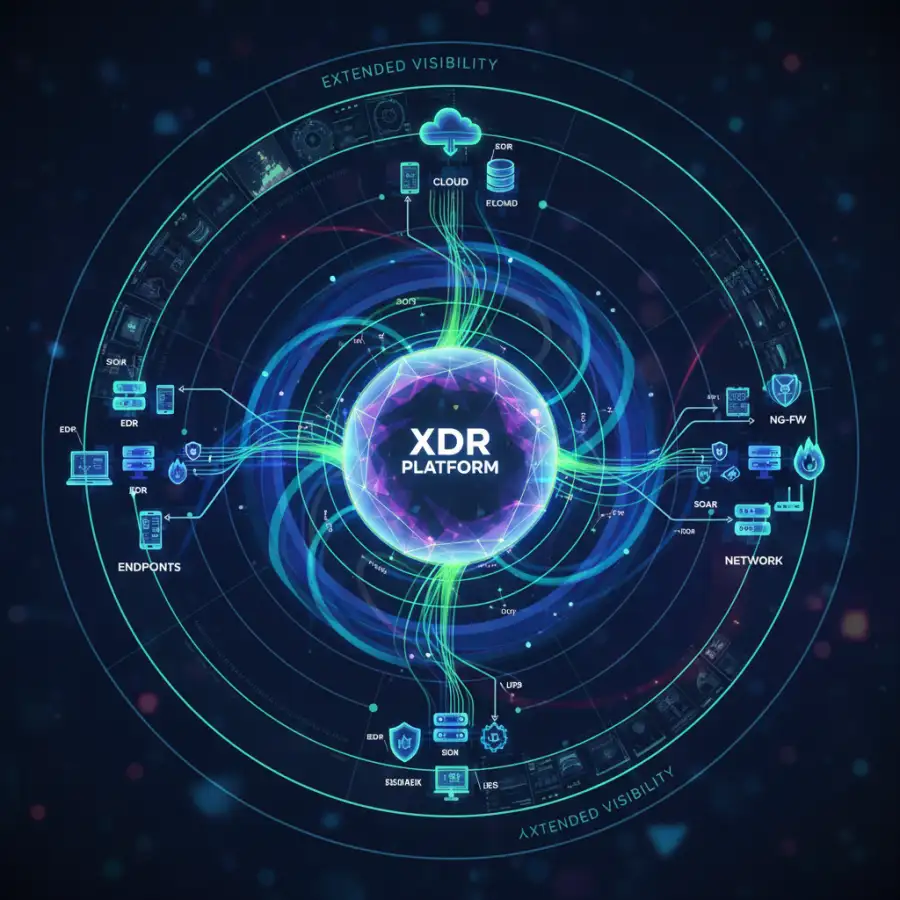
Extended Detection and Response (XDR) is a more complete approach to security. It combines data from different sources beyond just the endpoint. XDR solutions collect and analyze data from various security tools. These include EDR, network security solutions, cloud security solutions, and email security. This provides a single view of the security landscape. XDR offers better threat detection, investigation, and response by connecting data from different sources.
What are the benefits of using XDR? They include:
- Improved threat detection: XDR connects data across multiple security layers. It finds threats that individual tools might miss.
- Faster incident response: XDR provides a central view of security incidents. This allows security teams to respond faster.
- Reduced complexity: XDR combines security tools. This reduces complexity and simplifies management.
- Enhanced visibility: XDR offers a complete view of the security landscape. This improves visibility and reduces blind spots.
By connecting different security tools, XDR gives a broader and more accurate picture of the attack surface. This helps security teams understand and respond to threats better. How does XDR differ from EDR? Unlike EDR, which focuses on endpoint data, XDR combines data from multiple security layers. This gives a more complete view of the attack surface. This allows for more effective threat detection and response.
What is MDR?
Managed Detection and Response (MDR) is a security service. It provides threat detection and response. It often uses EDR and XDR technologies. MDR services are usually provided by outside companies. These companies manage and run the security tools for the organization. MDR services help organizations improve their security. They also reduce the work for their internal security teams. They provide access to expertise and resources that the organization may not have.
How do MDR services help? MDR providers offer these services:
- Threat detection: Monitoring and analyzing security data to find threats.
- Incident response: Investigating and responding to security incidents.
- Threat hunting: Actively searching for threats that may have avoided initial defenses.
- Security monitoring: Monitoring security tools and systems.
- Vulnerability management: Identifying and addressing security vulnerabilities.
Is MDR a good solution for you? This depends. MDR services are a good choice for organizations that lack the resources or expertise to manage their security tools. They are also good for those that want to improve their security. MDR services can give organizations access to advanced threat detection and response without needing to invest in the infrastructure and people to run these tools.
What is SIEM?
Security Information and Event Management (SIEM) solutions collect and analyze security data from different sources. These sources include firewalls, intrusion detection systems, and endpoint security solutions. SIEM provides real-time monitoring, security event correlation, and reporting. SIEM solutions offer a central place to collect and analyze security data. This makes it easier for security teams to find and respond to threats. SIEM solutions also help organizations follow security rules and standards.
What are the key functions of SIEM?
- Log management: Collecting and storing security logs from different sources.
- Security event correlation: Analyzing security events to find possible threats.
- Real-time monitoring: Monitoring security events in real time.
- Reporting and dashboards: Providing reports and dashboards on security events and trends.
- Compliance: Helping organizations meet legal requirements.
Is SIEM the right choice for all organizations? It depends on your needs. SIEM solutions are often used by large organizations with complex security needs. SIEM can be a useful tool for organizations that need to collect and analyze a lot of security data and must follow security rules.
What this means for you
Understanding the differences between EPP, EDR, XDR, MDR, and SIEM is essential for building a strong security plan. The right combination of these solutions depends on your organization's size, industry, and risk. For example, if you are a smaller business, EPP, EDR, and MDR might be enough. If you are a larger company, integrating SIEM and XDR may be helpful.
What should you consider when choosing a security solution? Think about your budget, the size and complexity of your IT environment, your security needs, and your in-house security expertise. What is the most important factor? Protecting your data is most important.
Risks, trade-offs, and blind spots
Each security solution has its own risks and limits. EPP solutions may not find advanced attacks. EDR solutions may create many alerts, which can be hard to manage. XDR solutions can be complex to set up and manage. MDR services can be expensive. They may not meet the specific needs of every organization. SIEM solutions can be complex to use and may need a lot of resources to maintain.
What are the potential blind spots? Security solutions can have blind spots if they are not set up correctly or if they are not connected with other security tools. Organizations must regularly check their security settings. They must ensure their security tools are connected to reduce blind spots.
Main points
The cybersecurity world is complex. Here are some key points:
- EPP is the first line of defense. It focuses on preventing threats.
- EDR focuses on finding and responding to threats on endpoints.
- XDR combines data from multiple security layers for better threat detection and response.
- MDR provides managed threat detection and response services.
- SIEM collects and analyzes security data from different sources.
- The right combination of these solutions depends on your organization's needs.
- Setting up and connecting security tools correctly is important to reduce blind spots.
Are you ready to improve your defenses? Review your current security, identify your needs, and choose the security solutions that best fit your organization. Remember, a proactive and layered approach is key to staying ahead of cyber threats. You can also explore additional resources to increase your security knowledge and protect your digital assets. Consider reviewing online programs and licensing resources to improve your cybersecurity knowledge and skills.