

Navigating the Cloud: Security Challenges and Mitigation Strategies
A comprehensive guide to cloud security challenges and solutions.
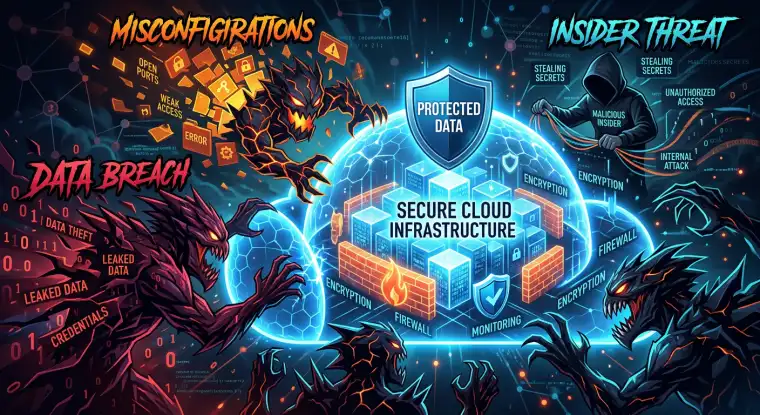
The cloud offers great potential, but it has risks. Are you ready for the security challenges of this technology?
Data breaches and compliance issues are real risks. Understanding these challenges is the first step in protecting your assets in the cloud.
This guide will give you the knowledge to use the cloud securely. You can use its benefits without risking your data.
Cloud computing changed how businesses work. It offers more scalability, flexibility, and cost savings. Moving to the cloud also creates new security challenges. This guide explains these challenges. It explores the risks and offers strategies to reduce them. Whether you use the cloud or plan to, understanding security is important for protecting your data and keeping your business running. This guide covers the most important cloud security challenges and how to solve them effectively.
Moving to the cloud is a strategic decision. You must carefully consider security. This article gives a complete overview of cloud security. It provides insights into common threats and practical solutions. By understanding these challenges, you can make smart decisions. You can build a strong security system for your cloud environment.
Quick navigation
What this means for you
The cloud offers opportunities for growth and innovation. It also means a new approach to security. Businesses need a proactive and adaptable security strategy. You must understand your cloud provider's shared responsibility model. Take responsibility for your data's security. Implement strong access controls. Regularly monitor your environment. Stay informed about the latest threats. This proactive approach lets you use the cloud's benefits without taking unnecessary risks. Does your current security match the specific challenges of your cloud environment?
Risks, trade-offs, and blind spots
Moving to the cloud involves trade-offs. One blind spot is the potential for not enough visibility. Many organizations struggle to see their cloud infrastructure. This makes it hard to find and respond to threats. Another trade-off involves control. The cloud offers flexibility. It also means giving up some control to the provider. You need to trust the provider. You also need to check their security practices and compliance certifications. Are you aware of the trade-offs in your cloud strategy?
Data breaches and data loss
Data breaches are a constant threat in the cloud. They can happen because of misconfigured storage, weak access controls, or malicious attacks. Data loss can happen because of accidental deletion, hardware failures, or cyberattacks. You need strong data protection strategies, including encryption, regular backups, and disaster recovery plans. Review and update your data security measures regularly. Make sure they match the latest threats. Is your data protection strategy complete enough to reduce the risks of a data breach?
Insufficient identity, credential, and access management
Identity, credential, and access management (ICAM) is critical in the cloud. Weak or poorly managed credentials are a target for attackers. You need to use strong authentication methods, like multi-factor authentication. Change your credentials regularly. Follow the principle of least privilege. Inadequate access controls can lead to unauthorized data access and breaches. Are your access controls detailed enough to restrict access based on need?
Misconfiguration and inadequate change control
Misconfiguration is a common cause of cloud security incidents. Simple mistakes in setting up cloud resources can create vulnerabilities. Inadequate change control can lead to problems. Attackers can exploit these vulnerabilities. Regularly check your cloud configurations. Automate security checks. Set up strict change management procedures. Are your configurations always secure and up-to-date?
Malware and other malicious attacks
The cloud is not safe from malware, ransomware, and other attacks. Attackers try to exploit weaknesses in cloud infrastructure and applications. Use strong endpoint protection, intrusion detection systems, and regular vulnerability scanning. Teach your team about phishing and other social engineering tactics. Are your defenses effective against the latest malware threats?
Compliance and regulatory challenges
Businesses using the cloud must follow regulations and industry standards. Data residency requirements, data privacy laws (like GDPR or CCPA), and industry-specific regulations add complexity to cloud security. Make sure your cloud environment meets compliance standards, including data encryption, access controls, and regular audits. Are you fully compliant with all the regulations for your industry?
Main points
- Cloud security needs a proactive approach. You must understand the shared responsibility model.
- Data breaches and data loss are major threats. You need strong data protection strategies.
- Insufficient ICAM can lead to unauthorized data access and breaches.
- Misconfiguration and inadequate change control can create vulnerabilities.
- Malware and malicious attacks are a constant risk to cloud environments.
- Compliance and regulatory challenges are important for cloud security.
- Check cloud configurations regularly and automate security checks.
- Use strong authentication and access controls, and the principle of least privilege.
Cloud security is an ongoing process. To learn more about cloud security, including the latest challenges and solutions, explore online resources and consider consulting with security experts. Implementing these strategies is important for protecting your data and assets. If you are considering the cloud, investigate accredited cloud-based solutions. Start taking steps to improve your security today and protect your business.