
Understanding the Pillars of Zero Trust: A Comprehensive Guide
Explore the fundamental principles and components of a Zero Trust security model.
Are you confident in your network security in the face of evolving cyber threats? Zero Trust offers a new approach.
Imagine a security model that treats every user and device as a potential threat, inside or outside the network. That is the core of Zero Trust.
This guide explains the critical pillars of a successful Zero Trust implementation. It ensures your digital assets remain secure.
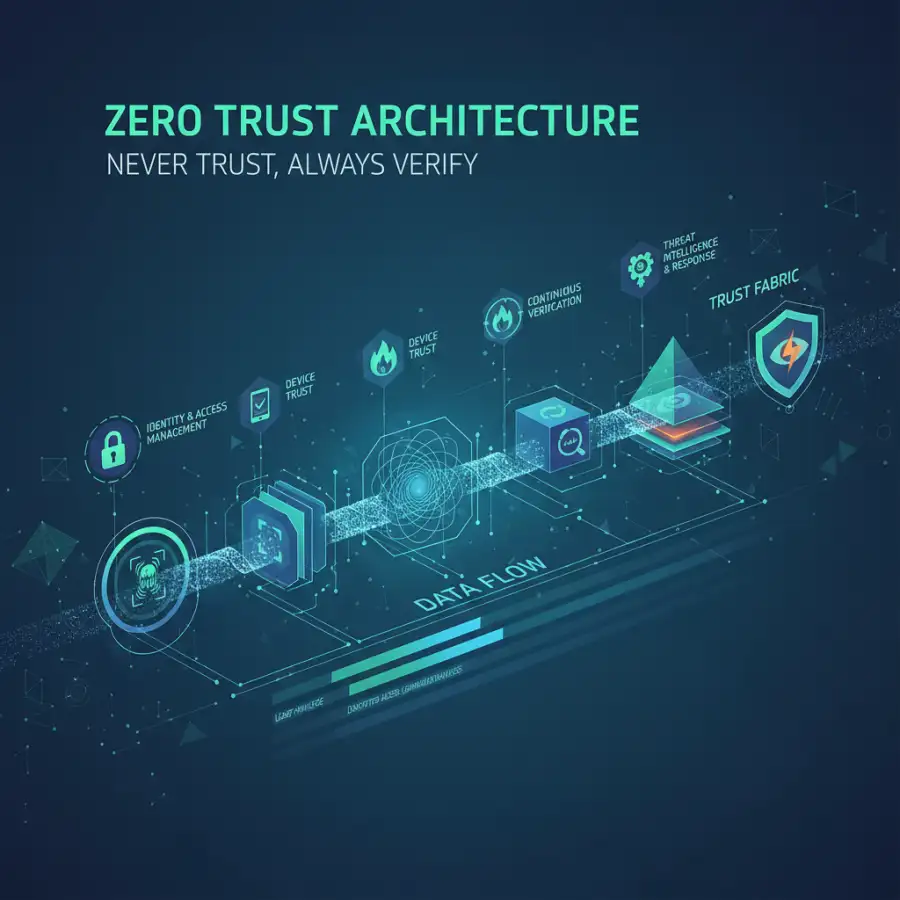
The concept of Zero Trust quickly became a key security approach for organizations. Traditional security models trust everything inside the network. Zero Trust follows the "never trust, always verify" principle. This guide explores the essential pillars of the Zero Trust framework. It provides a detailed understanding of its components and how to implement it. We will explore the critical tenets and goals of Zero Trust. You will learn how to protect your digital infrastructure against modern cyber threats. We will discuss the 5 basic tenets of DoD Zero Trust. We will touch on industry implementations from Microsoft and the Cybersecurity and Infrastructure Security Agency (CISA).
Quick navigation
The Core Principles of Zero Trust
Zero Trust is a strategic approach to cybersecurity, not just a product or technology. It uses several fundamental principles. They include: verify explicitly, least privilege access, and assume breach. These principles guide security control design and implementation. Zero Trust trusts no user or device automatically, no matter their location or network. Every access request must be verified. Verification is based on identity, context, and the security of the requesting entity. This shift from perimeter-based security is critical. How can organizations adapt to constant vigilance and verification?
Identity and Access Management
Identity and Access Management (IAM) is a key part of Zero Trust. It verifies user and device identity. It ensures they have the correct access level to resources. This includes strong authentication like multi-factor authentication (MFA). It also includes strong authorization mechanisms. IAM solutions must continuously monitor and use adaptive access policies. These policies respond to changes in user behavior or threat levels. Effective IAM implementations improve security and user experience. They provide seamless and secure access to resources. How can organizations balance strong security with ease of use?
Device Security
Device security is a critical Zero Trust pillar. All devices, including laptops, smartphones, and IoT devices, must meet specific security standards before access. This includes device posture assessment. This assesses the device's security configuration. It checks patching status, endpoint detection and response (EDR) software, and other security controls. Device security also involves mobile device management (MDM) and endpoint management solutions. They ensure devices comply with organizational policies. Note the differences between traditional security models and modern Zero Trust device security. Does your current security adequately address the devices accessing your network?
Network Segmentation
Network segmentation divides the network into smaller, isolated segments. It limits the impact of a security breach. This approach minimizes attacker movement. An attacker cannot easily move to other parts of the network if they compromise one segment. Segmentation uses techniques like virtual LANs (VLANs), micro-segmentation, and software-defined networking (SDN). Network segmentation improves security by reducing the attack surface. It also provides control over network traffic. Are you ready to redesign your network architecture for better security?
Data Security
Data security is very important in the Zero Trust framework. It protects sensitive data throughout its lifecycle. This includes data at rest, in transit, and in use. Data security measures include data encryption, data loss prevention (DLP), and data access governance. Organizations should implement data classification policies. These policies identify and protect their most critical data. Continuous monitoring and auditing of data access are essential. They help detect and respond to potential data breaches. How does your organization protect the confidentiality, integrity, and availability of your data?
Application Security
Application security is a key part of Zero Trust. It secures all applications, no matter their location or deployment model. This involves secure coding practices, vulnerability scanning, and regular security testing. Application security also includes web application firewalls (WAFs), intrusion detection systems (IDS), and other security controls. They protect against application-layer attacks. Securing cloud-based applications is very important. How can your organization secure your applications?
Automation and Orchestration
Automation and orchestration are important for effective Zero Trust implementation. Automating security tasks, like incident response, threat detection, and policy enforcement, can improve security. It also reduces the workload on security teams. Orchestration tools integrate security solutions. They streamline workflows, which leads to faster response times and improved threat mitigation. Automation and orchestration help organizations defend against cyber threats. What is the role of automation in your cybersecurity strategy?
What this means for you
Adopting Zero Trust can improve your organization's security. It reduces the attack surface, improves threat detection and response, and protects data. Zero Trust models provide control over access. This limits the impact of breaches. It minimizes attacker movement. Implementing Zero Trust also encourages security awareness. It promotes continuous monitoring and improvement. Successfully implementing this model helps build trust with customers and stakeholders. What are the main benefits of adopting Zero Trust in your organization?
Risks, trade-offs, and blind spots
Zero Trust offers advantages, but it also has challenges. Implementing Zero Trust can be complex. It might require changes to your infrastructure and processes. The costs of implementing new technologies and training staff can be high. There are potential trade-offs, like increased complexity and user issues due to stricter access controls. Organizations must be aware of potential blind spots, such as getting full visibility across all systems and data sources. Addressing these challenges is important for a successful Zero Trust implementation. Are you prepared to deal with the potential risks?
Main points
- Verify Explicitly: Always authenticate and authorize based on all available data points.
- Least Privilege: Grant only the minimum necessary access.
- Assume Breach: Operate as if a breach has already occurred.
- Identity as the Control Plane: Use identity to govern access.
- Continuous Monitoring: Regularly assess security posture.
- Network Segmentation: Divide your network into distinct segments.
- Data-Centric Security: Protect your data at all costs.
Zero Trust is a strategic undertaking. It requires a holistic approach. This includes technology, processes, and people. It needs continuous assessment, adaptation, and improvement to keep up with threats. By using the principles and pillars of Zero Trust, organizations can build a more secure digital environment. Take the first step today. Assess your current security and find areas for improvement. Explore this further.