

Mastering the SaaS Landscape: Comparing the Best Software Asset Management Platforms
Optimizing Licenses, Minimizing Spend, and Ensuring Compliance in a Cloud-First World.
Are hidden SaaS subscriptions and unused software licenses silently draining your company's budget and exposing you to compliance risks? The modern software environment is a complex web.
Beyond simply tracking what you own, how can a dedicated platform actively optimize your SaaS spend and guarantee you're always audit-ready, without adding to your administrative burden?
Discover the leading SaaS Software Asset Management solutions that transform chaos into clarity, ensuring every license is used efficiently and every dollar is wisely spent.
The business world has seen a significant shift from traditional on-premise software to Software as a Service (SaaS). While SaaS offers unparalleled flexibility, scalability, and accessibility, it has also made effective Software Asset Management (SAM) more complex for IT and finance departments. The proliferation of cloud-based applications, often adopted by individual teams without central IT oversight (known as 'shadow IT'), has led to license sprawl, redundant subscriptions, underutilized software, and significant overspending. Without a robust strategy, organizations risk not only budgetary bloat but also serious compliance issues during vendor audits.
This comprehensive comparison guide aims to explain the world of SaaS Software Asset Management. We will examine the key features that define a powerful SAM platform, analyze the offerings from leading industry players, and explore how these tools help businesses regain control over their software ecosystems. From license optimization and cost savings to audit readiness and strategic decision-making, understanding the best SaaS SAM solutions available is no longer a luxury, but a strategic necessity. By the end of this article, you will understand how to choose the ideal platform to streamline your software operations, ensure compliance, and maximize returns on every software investment.
Quick navigation
- The Rise of SaaS and the Challenge of Software Asset Management (SAM)
- Core Features of Effective SaaS SAM Platforms
- Top SaaS SAM Platforms: A Detailed Comparison
- Beyond Dedicated SAM: Broader SaaS Management Platforms & Emerging Tools
- What this means for you
- Risks, trade-offs, and blind spots
- Main points
The Rise of SaaS and the Challenge of Software Asset Management (SAM)
Digital transformation has led to a rapid migration of business operations to the cloud. Software as a Service (SaaS) applications, offering subscription-based access and seamless updates, have become the backbone of modern enterprises. From productivity suites like Microsoft 365 and Google Workspace to specialized tools for CRM, HR, marketing, and finance, SaaS is pervasive. While this shift offers agility and reduces IT infrastructure overhead, it has also created a complex challenge: effectively managing these distributed software assets.
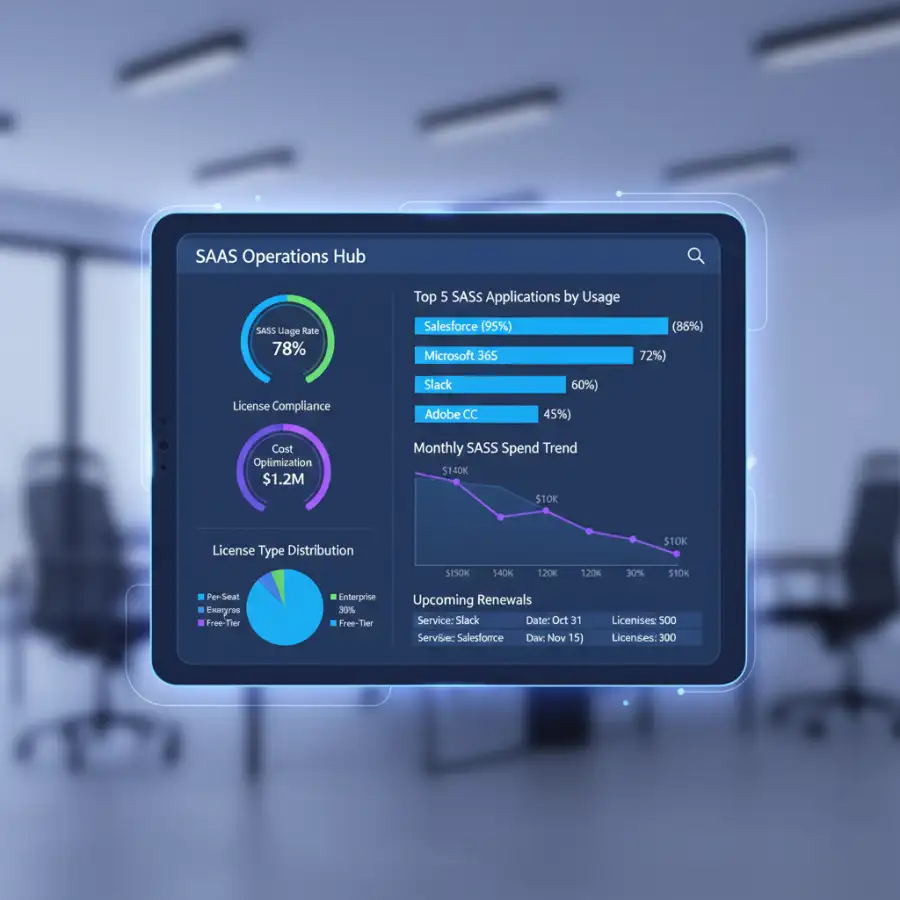
The traditional model of Software Asset Management (SAM), focused on tracking perpetual licenses for on-premise installations, struggles to cope with the dynamic nature of SaaS. The key challenges that have emerged include:
- License Sprawl and Shadow IT: The ease of purchasing SaaS subscriptions often leads to departments or even individual employees signing up for applications without central IT knowledge. This "shadow IT" results in a fragmented software landscape, making it nearly impossible to gain a comprehensive overview.
- Underutilization and Redundancy: Without clear visibility into actual usage, organizations frequently pay for licenses that are underused, unused, or overlap with other applications, leading to significant wasted spend.
- Compliance Risks: While SaaS often shifts some compliance burden to the provider, organizations are still responsible for managing user access, data governance, and adhering to terms of service. Non-compliance can result in hefty fines during vendor audits.
- Renewal Complexities: Managing hundreds or thousands of individual SaaS contracts, each with different renewal dates, terms, and pricing models, is an administrative nightmare that can lead to missed opportunities for negotiation or automatic renewals of unneeded services.
- Security Vulnerabilities: Unmanaged SaaS applications can create security gaps, acting as potential entry points for cyber threats if not properly configured and monitored.
This complex environment highlights the critical need for specialized SaaS Software Asset Management (SAM) platforms. These tools are specifically designed to address the unique challenges of cloud-based software, bringing order, visibility, and control to an otherwise chaotic ecosystem. Does the growth of SaaS truly empower organizations, or does it create a new form of digital debt if not properly managed?
Core Features of Effective SaaS SAM Platforms
An effective SaaS SAM platform is more than a simple spreadsheet; it's a strategic tool that provides continuous visibility, control, and optimization across your entire software portfolio. To truly deliver value, these platforms must offer a strong set of features designed to address the unique complexities of cloud-based software. Understanding these core functionalities is essential when evaluating potential solutions.
- Automated Discovery & Inventory: This fundamental feature identifies all SaaS applications in use across your organization. It goes beyond simple login data, integrating with single sign-on (SSO) providers, financial systems, and network traffic to uncover both sanctioned and shadow IT, providing a complete, real-time inventory of all software assets.
- License Optimization & Usage Tracking: This is key to cost savings. This feature tracks actual user activity within each SaaS application, identifying underutilized or unused licenses. It enables 'right-sizing' your subscriptions by reharvesting licenses from inactive users, downgrading plans where usage is low, or identifying redundant applications.
- Cost Management & Spend Optimization: Provides a centralized view of all SaaS spending, including subscription costs, renewal dates, and contract terms. Advanced platforms offer spend analysis, benchmarking against industry averages, and forecasting tools to help negotiate better deals and avoid unexpected renewals.
- Compliance Management & Audit Readiness: Ensures your organization adheres to software vendor licensing terms and internal policies. It generates comprehensive reports demonstrating compliance, identifies potential risks, and provides the documentation needed to be audit-ready, minimizing the risk of costly fines.
- Integration with Identity Providers (SSO) and IT Systems: Seamless integration with your existing identity management systems (like Okta, Azure AD) and other IT tools (CMDB, HRIS) is critical. This automates user provisioning and de-provisioning, ensuring licenses are assigned and revoked efficiently, and user data is consistent across platforms.
- Reporting & Analytics: Customizable dashboards and detailed reports offer granular insights into SaaS usage, spend trends, renewal forecasts, and compliance status. This data empowers IT and finance teams to make informed, data-driven decisions.
- Automated Provisioning & De-provisioning: Streamlines the onboarding and offboarding process for employees. When a new employee joins, necessary SaaS licenses can be automatically provisioned; when an employee leaves, their licenses can be revoked and reharvested, preventing wasted spend and potential security risks.
While these features offer immense benefits, is simply having them enough, or does the real value come from how seamlessly they integrate and operate within an organization's existing workflows?
Top SaaS SAM Platforms: A Detailed Comparison
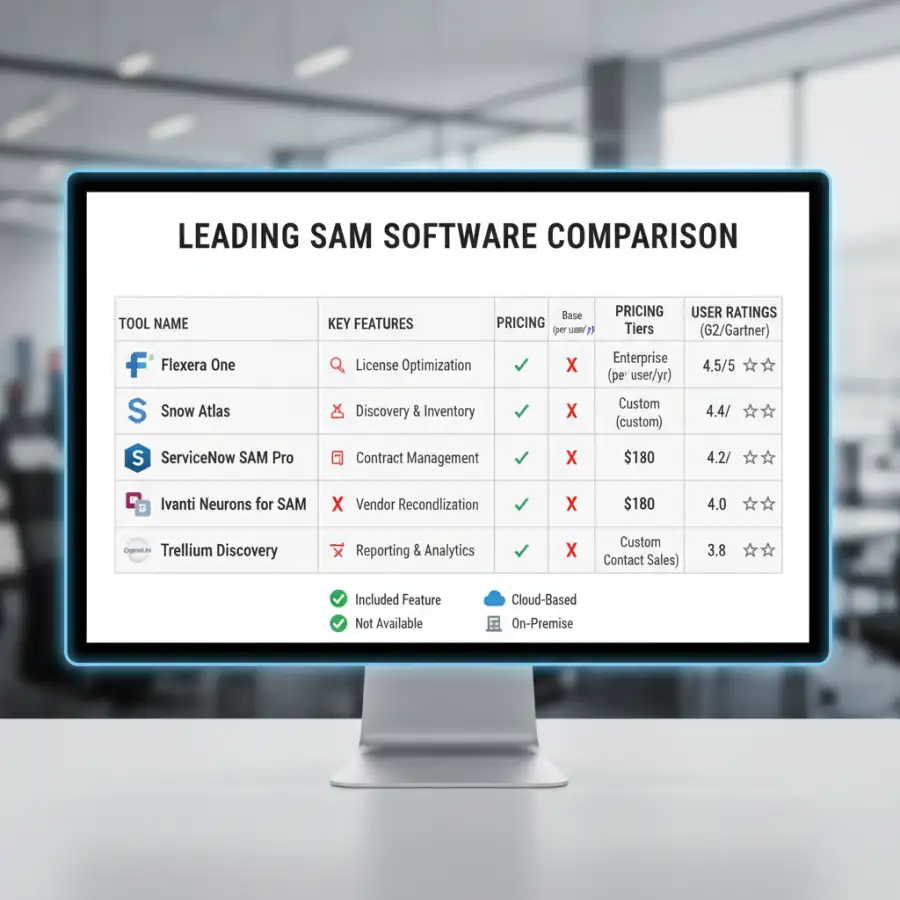
The market for SaaS SAM platforms is competitive, with several key players offering sophisticated solutions designed to manage the complexity of cloud software. While each platform aims to optimize software spend and ensure compliance, they often have distinct strengths, ideal for different organizational sizes and complexities. Here's a detailed look at some of the leaders in the space.
Flexera One (formerly FlexNet Manager for SaaS)
- Overview: Flexera is an established leader in traditional SAM, and Flexera One applies this expertise to SaaS. It offers comprehensive visibility, optimization, and governance across all software, including on-premise, SaaS, and cloud.
- Key Features: Automated discovery, granular usage tracking, spend optimization, contract lifecycle management, license reconciliation, compliance management for complex vendor terms, cloud cost optimization, and integration with a wide range of enterprise systems.
- Pricing Model: Enterprise-focused, typically custom pricing based on the size of the organization, number of assets/users, and required modules. No free tier.
- Pros: Very comprehensive for hybrid IT environments (on-prem, SaaS, cloud), deep analytics, strong compliance features, trusted by large enterprises.
- Cons: Can be complex to implement and manage, higher cost, potentially overkill for smaller organizations primarily focused on SaaS, significant learning curve.
- Ideal User: Large enterprises with complex, hybrid software portfolios needing extensive compliance and optimization across all software types.
Snow Software (Snow Atlas)
- Overview: Snow Software provides a unified platform, Snow Atlas, for technology intelligence, including powerful SaaS management capabilities. It helps organizations understand, manage, and optimize their technology investments.
- Key Features: SaaS discovery & usage tracking, spend optimization, license management, contract reconciliation, risk and compliance management, cloud cost management, and integration with various business systems.
- Pricing Model: Enterprise-focused, custom pricing based on technology spend and needs. No free tier.
- Pros: Strong focus on actionable insights, user-friendly dashboards, good for multi-cloud environments, comprehensive reporting, proactive recommendations for optimization.
- Cons: Like Flexera, can be a significant investment, might be too broad for organizations solely focused on SaaS, implementation can require resources.
- Ideal User: Mid-sized to large enterprises looking for complete technology insights that include robust SaaS, on-premise, and cloud asset management.
Zylo
- Overview: Zylo is a dedicated SaaS Management Platform (SMP) that focuses specifically on discovering, managing, and optimizing SaaS applications. It’s designed specifically for the cloud era.
- Key Features: Automated SaaS discovery, spend visibility and optimization, usage intelligence (at a granular level), contract management, renewal management, vendor relationship management, and employee experience insights.
- Pricing Model: Typically subscription-based, priced based on the number of employees or the total SaaS spend being managed. Focuses on delivering ROI through cost savings.
- Pros: Detailed insights into SaaS-specific usage and spend, purpose-built for SaaS, strong ROI focus, intuitive user interface, excellent for controlling shadow IT.
- Cons: Primarily SaaS-focused, less emphasis on traditional on-premise software or broader IT asset management beyond SaaS.
- Ideal User: Enterprises and fast-growing organizations with significant SaaS sprawl and a primary need to optimize cloud software spending and compliance.
Productiv
- Overview: Productiv is an Application Engagement Management (AEM) platform that provides deep visibility into SaaS application usage and engagement. It focuses on helping organizations maximize the value of their software investments by understanding how employees interact with apps.
- Key Features: Detailed application usage analytics, license optimization, spend management, contract tracking, automated provisioning/de-provisioning, integration with HRIS and identity providers, and insights into application adoption.
- Pricing Model: Subscription-based, often tailored to the number of users or apps managed.
- Pros: Extensive depth in user engagement data, helps drive adoption and value from SaaS apps, strong for identifying collaboration patterns, proactive optimization recommendations.
- Cons: Focus on user engagement might be secondary for some organizations solely focused on basic cost reduction, newer entrant compared to traditional SAM vendors.
- Ideal User: Companies focused on maximizing employee productivity and ROI from their SaaS portfolio, seeking deep insights into user engagement and application value.
For large organizations, the financial management aspect of SaaS SAM is critical. Platforms must integrate seamlessly with existing accounting systems to accurately track software expenses, manage subscription renewals, and ensure financial compliance. For instance, integration capabilities with advanced accounting solutions, like those provided by Sage Intacct SaaS, are crucial for a holistic financial overview of software assets. Without this, even the most detailed usage reports won't fully inform your financial strategy. Do these advanced platforms truly guarantee a positive ROI, or does their success depend heavily on an organization's internal processes and commitment to change?
Beyond Dedicated SAM: Broader SaaS Management Platforms & Emerging Tools
While dedicated SaaS SAM platforms offer deep, specialized functionality, the broader ecosystem of SaaS management includes other tools that can provide significant value, especially for smaller businesses or those with less complex requirements. These solutions often blend elements of SAM with other IT operations or financial management capabilities.
Broader SaaS Management Platforms (SMPs)
Platforms like BetterCloud and Cledara aren't exclusively SAM tools, but they encompass strong SaaS management capabilities. BetterCloud, for example, focuses on SaaS operations management, including security, automation, and some aspects of lifecycle management and access control. It can help identify shadow IT and manage user access effectively across multiple SaaS applications. Cledara, on the other hand, positions itself as a spend management platform for SaaS, helping businesses track and control subscriptions, often integrating with payment cards to provide granular visibility into SaaS expenditure. These platforms excel when an organization needs not just asset tracking, but also operational control and financial oversight of its cloud applications.
Emerging and Freemium Tools
For very small businesses or startups with limited budgets, a full-fledged SAM platform might be overkill. Here, a combination of strategies and tools can be effective:
- Manual Auditing with Spreadsheets: While not ideal for scale, a well-maintained spreadsheet can track basic SaaS subscriptions, renewal dates, and assigned users. This requires discipline but is a zero-cost starting point.
- Native Admin Dashboards: Many SaaS applications (e.g., Microsoft 365, Google Workspace, Slack) offer robust admin dashboards that provide insights into user activity and license utilization. Utilizing these native tools can help manage individual applications more effectively.
- Browser Extensions & Integrations: Some browser extensions or lightweight tools can help identify SaaS applications visited by employees, offering a basic form of discovery.
- Financial Tools with SaaS Spend Features: Accounting software or expense management platforms are increasingly adding features to categorize and report on SaaS subscriptions, providing a financial layer of control.
These less specialized tools represent a trade-off: they offer lower cost or greater simplicity but lack the depth of automation, optimization, and compliance features found in dedicated SAM solutions. Is a piecemeal approach truly sustainable as a business grows, or does it eventually become more administratively burdensome than the cost of a dedicated platform?

What this means for you
For you, the business leader or IT professional managing the complexities of modern software, understanding the landscape of SaaS Software Asset Management means moving from reacting to proactively planning. It's about turning what could be a major financial drain and compliance issue into a clear competitive advantage. This choice directly impacts your budget, security posture, and operational agility.
Firstly, it translates into real cost savings. By gaining deep visibility into SaaS usage, you can eliminate redundant licenses, reharvest unused subscriptions, and negotiate more favorable contract terms. This isn't just about cutting costs; it's about optimizing your software spend to ensure every dollar invested delivers maximum value. This aligns perfectly with the principles discussed in the ROI revolution in cost-benefit analysis of SaaS tools, demonstrating a clear path to measurable returns.
Secondly, it provides strong compliance and audit readiness. No more sleepless nights worrying about vendor audits. A robust SaaS SAM platform provides a clear audit trail, automatically tracks license entitlements against actual usage, and identifies potential compliance gaps before they become costly issues. This peace of mind allows your team to innovate rather than manage administrative tasks. Thirdly, it improves operational efficiency and security. Automated provisioning and de-provisioning streamline employee onboarding and offboarding, while better control over software access reduces security vulnerabilities. This comprehensive approach ensures your software ecosystem is not only cost-effective but also secure and agile.
Ultimately, choosing the right SaaS SAM platform means regaining control over your software. It empowers you to make data-driven decisions about your technology stack, ensuring your investments are aligned with business goals and that your operations run smoothly and securely. Can any organization truly afford to operate without this level of insight and control in today's cloud-dominant environment?
Risks, trade-offs, and blind spots
While the benefits of optimized SaaS spend and streamlined compliance are strong, adopting a SaaS SAM platform isn't without its own set of risks, trade-offs, and common blind spots. Understanding these potential pitfalls is crucial for successful implementation and long-term value.
Risks and Trade-offs:
- Implementation Complexity: Integrating a comprehensive SaaS SAM platform into an existing, often fragmented, IT environment can be complex and time-consuming. It requires mapping existing data, configuring integrations, and establishing new workflows, potentially leading to initial disruption.
- Data Accuracy Challenges: The effectiveness of any SAM tool depends on the accuracy of the data it collects. Incomplete integrations, shadow IT, or inconsistent data sources can lead to inaccurate reports and recommendations.
- Vendor Lock-in: Committing to a specific SAM vendor, especially for a comprehensive platform, can create a degree of vendor lock-in. Switching to a different provider later might involve significant effort in data migration and re-integration with other systems.
- Cost vs. Value for Smaller Businesses: While the ROI is clear for larger enterprises, smaller businesses might find the initial investment and ongoing subscription costs of premium SAM platforms a major consideration, especially if their SaaS sprawl is limited.
- Human Factors & Shadow IT Persistence: Even with powerful discovery tools, eliminating shadow IT entirely can be challenging. User-driven SaaS adoption persists, requiring ongoing communication and policy enforcement, which the software alone cannot solve.
Common Blind Spots:
- Ignoring the 'Why': Focusing solely on tool features without clearly defining the business objectives for implementing SAM (e.g., specific cost-saving targets, compliance goals) can lead to underutilization and perceived failure.
- Underestimating User Adoption: The best platform won't deliver if employees aren't trained or don't understand its value. Lack of user buy-in for new processes (like check-in/check-out for licenses) is a common blind spot.
- Neglecting Integration with Financial Systems: A crucial blind spot is failing to deeply integrate the SAM platform with your financial management and SaaS accounting service. This can lead to discrepancies between reported software assets and actual financial records, hindering accurate budgeting and cost allocation.
- Overlooking Security Implications: While SAM improves security, the platform itself holds sensitive data. Neglecting to scrutinize the SAM vendor's security practices and data privacy compliance can introduce new risks.
- Focusing Only on Cost: While cost optimization is a major driver, focusing exclusively on it can lead to decisions that negatively impact productivity or stifle innovation by cutting access to essential tools.
Given the complex nature of these considerations, is it truly possible for an organization to achieve perfect SaaS SAM from day one, or is it an ongoing process of refinement and adaptation?
Main points
Managing the complex world of SaaS Software Asset Management is essential for modern businesses. Here are the key takeaways to guide your decision-making process:
- The rapid adoption of SaaS creates challenges like license sprawl, underutilization, compliance risks, and shadow IT, necessitating specialized SAM platforms.
- Effective SaaS SAM platforms offer automated discovery, granular usage tracking, comprehensive cost management, robust compliance features, and seamless integration with existing IT systems.
- Leading premium solutions like Flexera One, Snow Software, Zylo, and Productiv provide deep insights and optimization capabilities, tailored for different organizational sizes and specific needs.
- Broader SaaS management platforms (e.g., BetterCloud, Cledara) and strategic use of native admin dashboards or spreadsheets can serve as alternatives for smaller businesses.
- Choosing the right platform leads to significant cost savings, enhanced compliance and audit readiness, improved operational efficiency, and a stronger security posture.
- Be aware of potential risks such as implementation complexity, data accuracy challenges, vendor lock-in, and the need for robust integration with financial and identity management systems.
- Prioritize solutions that provide actionable insights into user engagement and actively help optimize not just spend, but also the value derived from each SaaS application.
- Successful SaaS SAM is an ongoing process that requires continuous monitoring, user adoption, and alignment with overarching business objectives.
Investing in the right SaaS Software Asset Management platform is a strategic decision that empowers your organization to control costs, mitigate risks, and maximize the value of its cloud investments. By carefully comparing features, understanding pricing models, and aligning with your specific business needs, you can transform software complexity into a powerful tool for efficiency and growth. Take control of your SaaS subscriptions and confidently drive your digital future.