

Mastering Your Inventory: A Comprehensive Guide to SaaS Asset Management Software
Uncover the top platforms, evaluate cost-effective solutions, and streamline your operations with the right tools.
Are your valuable company assets slipping through the cracks, leading to unexpected costs and operational headaches? Imagine a world where every piece of equipment, every license, and every digital resource is accounted for, optimized, and performing at its peak.
The sheer complexity of tracking diverse assets, from physical hardware to intangible software licenses, can overwhelm even the most diligent teams. What if there was a smarter, more efficient way to gain complete visibility and control, without breaking the bank?
Forget the days of manual spreadsheets and reactive maintenance. Discover how SaaS asset management software is transforming how businesses, especially those conscious of their bottom line, keep their inventories precise, secure, and future-ready.
In today's fast-paced business environment, efficient asset management is no longer a luxury; it's a necessity. From physical equipment in the field to vital software licenses and digital resources, every asset contributes to your operational efficiency and bottom line. However, tracking, maintaining, and optimizing these diverse assets can present significant challenges. This comprehensive guide explores the world of SaaS Asset Management Software, detailing how cloud-based solutions offer great flexibility, scalability, and cost-effectiveness. We'll help you navigate the myriad options available, with a particular focus on identifying platforms that provide robust features without burdensome upfront investments, empowering you to make informed decisions that align with your organizational needs for tracking and managing assets.
Quick navigation
- The Evolution of Asset Management: Why SaaS is Essential
- Key Features and Considerations for Effective Software Selection
- Top SaaS Asset Management Software: Solutions for Every Budget
- What this means for you
- Risks, trade-offs, and blind spots
- Future-Proofing Your Asset Strategy with SaaS
- Main points
The Evolution of Asset Management: Why SaaS is Essential
For decades, asset management was a complex, often cumbersome process, largely confined to on-premise systems and manual record-keeping. Businesses grappled with physical servers, costly software licenses, and the constant burden of maintenance and updates. This traditional approach often led to siloed data, delayed insights, and a reactive stance towards asset care. The advent of Software as a Service (SaaS) has dramatically reshaped this landscape, ushering in an era where asset management is dynamic, accessible, and remarkably agile.
SaaS solutions for asset management are hosted in the cloud, eliminating the need for extensive upfront hardware investments or dedicated IT staff for management. This translates directly into reduced operational costs and a lower total cost of ownership, making powerful tools available even to small and medium-sized enterprises (SMEs). With SaaS, updates are handled by the vendor, security is often robust and managed centrally, and access to your asset data is possible from anywhere, at any time, via any internet-enabled device. This immediate accessibility fosters real-time data insights, allowing for proactive decision-making rather than reactive problem-solving.

Beyond cost savings, SaaS platforms offer unparalleled scalability. As your business grows and your asset portfolio expands, your software can seamlessly adapt without requiring significant infrastructure overhauls. This agility is crucial in today's rapidly changing market, enabling businesses to pivot quickly and optimize resource allocation. The collaborative nature of cloud-based systems also means teams can work together more efficiently, sharing information and coordinating efforts regardless of their physical location. But does this shift to the cloud truly simplify the complex task of asset oversight, or merely move the problem elsewhere?
Key Features and Considerations for Effective Software Selection
Choosing the right SaaS asset management software means looking beyond the flashy interfaces and focusing on the core functionalities that will genuinely serve your operational needs. The best platforms offer a comprehensive suite of tools designed to provide end-to-end visibility and control over your assets. At the heart of any robust system is superior asset tracking, often facilitated by integrated barcode or RFID scanning capabilities. This ensures precise identification and location data, significantly reducing loss and improving inventory accuracy. Beyond mere identification, a strong platform should offer full asset lifecycle management, from procurement and deployment to maintenance, depreciation, and eventual retirement or disposal. This holistic view allows you to optimize asset utilization and plan strategically for replacements.
Effective maintenance scheduling is another non-negotiable feature. Preventative maintenance, automated alerts, and detailed service histories help extend asset lifespan, minimize downtime, and control repair costs. Financial tracking features, including depreciation calculations and audit trails, are vital for compliance and accurate financial reporting. Furthermore, the ability to generate customizable reports offers invaluable insights into asset performance, costs, and utilization trends, empowering data-driven decisions. Integration capabilities are also crucial; can the software seamlessly integrate with your existing SaaS accounting services, ERP systems, or HR platforms? A system that operates in isolation creates new data silos, defeating the purpose of streamlining operations.
When evaluating options, consider your specific industry requirements. Do you need features like calibration management for scientific equipment, or robust IT asset discovery for software and hardware? A general-purpose solution might suffice for some, but specialized needs often warrant a more tailored approach. How do these features directly translate into tangible benefits for your bottom line?
Top SaaS Asset Management Software: Solutions for Every Budget
Navigating the diverse landscape of SaaS asset management software can feel overwhelming, especially when balancing feature sets against budget constraints. Thankfully, the market offers a range of powerful solutions, from enterprise-grade platforms to cost-effective options suitable for smaller businesses. Here, we highlight a few prominent players, emphasizing their strengths and potential appeal to different organizational needs.
Freshservice: Often lauded for its IT service management (ITSM) capabilities, Freshservice extends robust IT asset management (ITAM) features. It excels in discovering and managing both hardware and software assets, tracking licenses, and automating incident and problem management related to IT assets. While it offers comprehensive features suitable for IT-centric organizations, its pricing scales, making it a powerful option for growing businesses. They often have tiered plans, with basic ITAM functionalities available at more accessible price points.
Jira Service Management (with Asset Management): For teams already embedded in the Atlassian ecosystem, Jira Service Management with its integrated asset management solution (formerly Insight) is a natural fit. It provides a highly configurable database to track any type of asset, linking them directly to service requests, incidents, and changes. This deep integration is invaluable for contextualizing asset data within broader operational workflows. While not strictly free, Atlassian offers various pricing models, and for existing Jira users, the add-on provides significant value. This platform is particularly strong for those who want to unify IT and non-IT asset tracking within a familiar environment.
Asset Panda: Known for its flexibility and user-friendly interface, Asset Panda allows businesses to track virtually any asset using their mobile devices. Its strength lies in its configurability; users can customize fields, workflows, and reports without needing to write code. This makes it highly adaptable for various industries and asset types, from equipment and vehicles to inventory and facilities. Asset Panda doesn't typically offer a free tier, but its pricing is designed to be scalable, making it a strong contender for businesses seeking a customizable and mobile-first approach to asset tracking.
EZOfficeInventory: This solution focuses on ease of use and comprehensive features for equipment and inventory tracking. It supports barcode, RFID, and QR code scanning, offers robust check-in/check-out functionality, maintenance management, and detailed reporting. EZOfficeInventory is often praised for its ability to manage a wide array of physical assets across different locations. While it doesn't boast a free plan, it provides competitive pricing tiers designed to accommodate businesses from small teams to larger enterprises, with a strong emphasis on providing value for equipment-heavy operations.
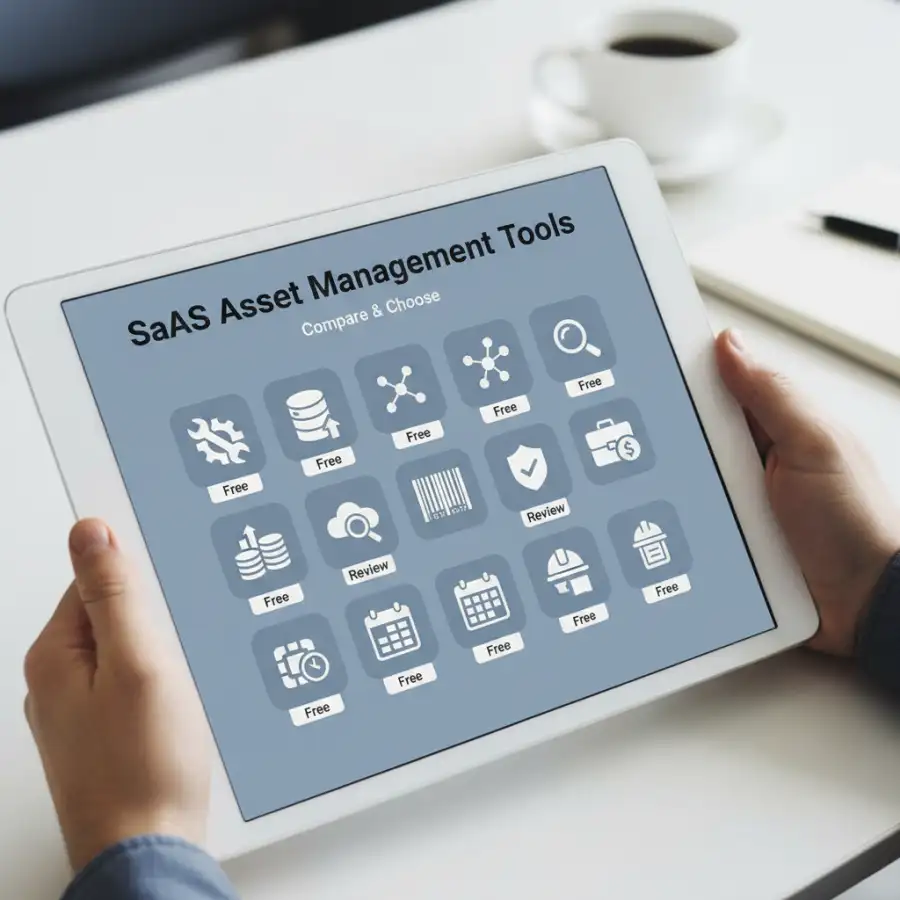
These platforms represent just a slice of the SaaS asset management software market. When reviewing options, always consider not only the upfront cost but also the long-term value, scalability, and how well each solution aligns with your organization's specific demands for tracking and managing assets. Each offers a concise overview of how these diverse solutions cater to varying operational demands, and many provide free trials to help you make an informed decision.
What this means for you
For organizations grappling with outdated asset tracking methods, or for those just starting to build their asset management strategy, the implications of adopting SaaS solutions are profound. If you are a small to medium-sized enterprise (SME) or operate with tight budget constraints, SaaS democratizes access to powerful tools previously only available to large corporations. You no longer need to invest heavily in infrastructure or a dedicated IT team to manage a complex system. Instead, you can subscribe to a service, often on a monthly or annual basis, and immediately gain access to sophisticated features.
Practically, this means you can transition from reactive asset management to a proactive approach. Imagine being able to anticipate maintenance needs before a critical piece of equipment fails, or knowing the exact location and status of every tool in your inventory. This shift reduces costly downtime, extends the life of your assets, and significantly improves operational efficiency. Implementing a SaaS solution typically involves a streamlined onboarding process, with vendors often providing comprehensive support and training. The key is to start by defining your most pressing asset management challenges and then selecting a platform whose features directly address those pain points.
Consider integrating your new asset management system with other business platforms, such as your CRM or project management software, to create a truly unified operational ecosystem. This integration enhances data flow, reduces manual entry errors, and provides a more holistic view of your business. The flexibility of SaaS also means you can often start with a basic package and scale up as your needs evolve, ensuring your investment remains relevant. Where does your organization stand to gain the most immediate impact from this kind of transformation?
Risks, trade-offs, and blind spots
While the benefits of SaaS asset management are compelling, a prudent approach demands a clear understanding of the potential risks and trade-offs involved. No solution is without its complexities, and recognizing these blind spots early can save significant headaches down the line. One primary concern is vendor lock-in. Once you invest time and resources into a specific platform, migrating your data and processes to a different provider can be a formidable task. This makes the initial vendor selection process critically important, as you're essentially committing to a long-term partnership.
Data security is another paramount consideration. Entrusting your sensitive asset data to a third-party cloud provider requires meticulous due diligence. You must thoroughly vet a vendor's security protocols, compliance certifications, and data backup strategies. While SaaS providers typically invest heavily in security, the responsibility for understanding and ensuring these measures ultimately rests with your organization. What assurances does the vendor offer regarding data privacy and protection, and how do they handle potential breaches?
Integration complexities can also pose challenges. While many SaaS platforms boast extensive integration capabilities, ensuring seamless data flow with your existing legacy systems or specialized software might require custom development or the use of middleware. This can add unforeseen costs and extend implementation timelines. Furthermore, the learning curve for any new software, regardless of its user-friendliness, should not be underestimated. Adequate training and change management strategies are essential to ensure user adoption and maximize the return on your investment. Are you truly prepared for the unseen challenges that come with any new system, or are you focusing solely on the perceived benefits?

Future-Proofing Your Asset Strategy with SaaS
In a world of constant technological advancement, your asset management strategy needs to be future-proof. Choosing a SaaS platform is a significant step in this direction, primarily because cloud-based solutions are inherently designed for scalability and continuous evolution. Unlike on-premise software that becomes static the moment it's installed, SaaS providers regularly release updates, new features, and performance enhancements, ensuring your system remains current without requiring your intervention.
Look for platforms that demonstrate a clear roadmap for integrating emerging technologies. The convergence of Artificial Intelligence (AI) and the Internet of Things (IoT) holds immense promise for asset management. Imagine sensors on your equipment automatically reporting performance data, triggering maintenance alerts, or predicting failures using AI-driven analytics. A forward-thinking SaaS vendor will be actively exploring and incorporating these capabilities, allowing your asset strategy to evolve alongside industry innovations. This also ties into being able to understand the true ROI of your investment over time.
Furthermore, consider a vendor's commitment to API extensibility. A robust API allows for custom integrations and ensures that your asset management system can communicate effectively with other specialized tools you might adopt in the future. This open architecture prevents your platform from becoming a bottleneck as your technology stack evolves. By selecting a flexible and adaptable SaaS solution, you're not just solving today's asset management challenges, but also building a resilient foundation for the years to come, a crucial element in mastering any robust SaaS platform. How can you ensure your investment today continues to deliver value tomorrow, adapting to changes you can't even predict yet?
Main points
- SaaS asset management offers unparalleled accessibility and scalability compared to traditional systems.
- Prioritize features like lifecycle tracking, maintenance scheduling, and robust reporting for optimal value.
- Explore platforms with transparent pricing models, including free tiers or flexible subscriptions, to match your budget.
- Thoroughly vet vendors for data security protocols and seamless integration capabilities to avoid future headaches.
- A strategic SaaS choice can significantly reduce operational costs, improve asset utilization, and boost overall efficiency.
- Regularly review your chosen software's performance and explore new features to maximize your investment.
The right SaaS asset management software isn't just a tool; it's a strategic partner for sustained growth and efficiency. Take the step to transform your asset oversight today and secure your operational future.